Farm Record Keeping: What to Record and How to Start
On this page
A farm should keep six kinds of records: animals, health, breeding, production, feed, and money. Start with one enterprise and one daily entry, then add the rest. A notebook, a spreadsheet or an app can all hold them. The best system is the one you will still use in December.
Good records answer practical questions. Did this batch make money? Which cow needs culling? When did we last deworm? When the vet, the bank or an inspector asks, they let you show the answer instead of guessing.
Why farm records matter
Health decisions. A treatment history tells your vet what has already been tried. Records also expose patterns, such as deaths that rise every December.
Money decisions. Without income and expense records you cannot tell which enterprise pays. Our guide to whether livestock farming is profitable shows the numbers your records should answer.
Rules and paperwork. Many countries require livestock keepers to record animal identification, movements and medicine use. Rules differ by country and species, so ask your agriculture department what applies to you. Banks and tax offices want dated financial records too.
Records to keep
Animal records
Give each animal or batch a name or number. Record its species, breed, sex, birth or arrival date, source, and where it lives. For a flock of broilers, one batch record with the arrival date and starting count is enough. For cattle and goats, keep a record per animal.
Health and treatment records
- Vaccinations: date, product, dose, who gave it
- Treatments: date, condition, medicine, dose, outcome
- Withdrawal period: the date the animal or its milk or eggs can be sold
- Vet visits: date, diagnosis, advice
- Deaths: date and suspected cause
Follow your vet and local regulations on schedules and withdrawal times. Our guide to livestock vaccination and health records covers this in depth.
Breeding records
Record the mating date, sire, pregnancy check, due date, and actual birth date. Add the offspring and their weights. A due date entered at mating is the best reminder you will get. See the cattle breeding cycle calendar for cattle timings.
Production records
| Enterprise | Record daily or weekly |
|---|---|
| Laying hens | Eggs collected, broken or spoiled eggs, deaths |
| Dairy | Milk per animal or herd |
| Meat animals | Weights, deaths, days to sale |
| All | Water and feed use, if you track it |
Weigh on the same day each week. Growth is hard to judge by eye.
Feed records
Track what you buy, what is in stock, and what you feed. Dividing stock by daily use tells you how many days of feed are left. Feed is usually the largest cost in a livestock business, so this record pays for itself first.
Income and expenses
Record every sale and every cost: feed, medicine, labour, transport, repairs, utilities. Note the buyer, product, date and whether it is paid. Keep receipts or photos of them.
Paper, spreadsheet or app
| Paper | Spreadsheet | App | |
|---|---|---|---|
| Setup cost | Very low | Low | Free plan or low |
| Works without power or signal | Yes | Yes, on a laptop | No, needs internet |
| Search a past entry | Slow | Good | Fast |
| Reminders | None | Manual | Built in |
| Several workers | Awkward | Awkward | Easier |
| Reports for bank or vet | Retype by hand | Build yourself | Generated |
| Risk of loss | Fire, water, loss | Lost or overwritten file | Depends on provider |
Paper suits a very small farm and works anywhere. A spreadsheet gives you totals and charts once you learn the formulas. An app adds reminders, stock levels and team access, but needs a phone and a connection. Whichever you pick, back it up: photograph paper pages monthly, and copy spreadsheets to cloud storage weekly.
If you raise several species or have staff, an app usually saves time. Our comparison of farm management software explains what to look for.
How Livestock Manager handles each record
Livestock Manager is a farm records app for iOS, Android and the web, in 15 languages, with a free plan.
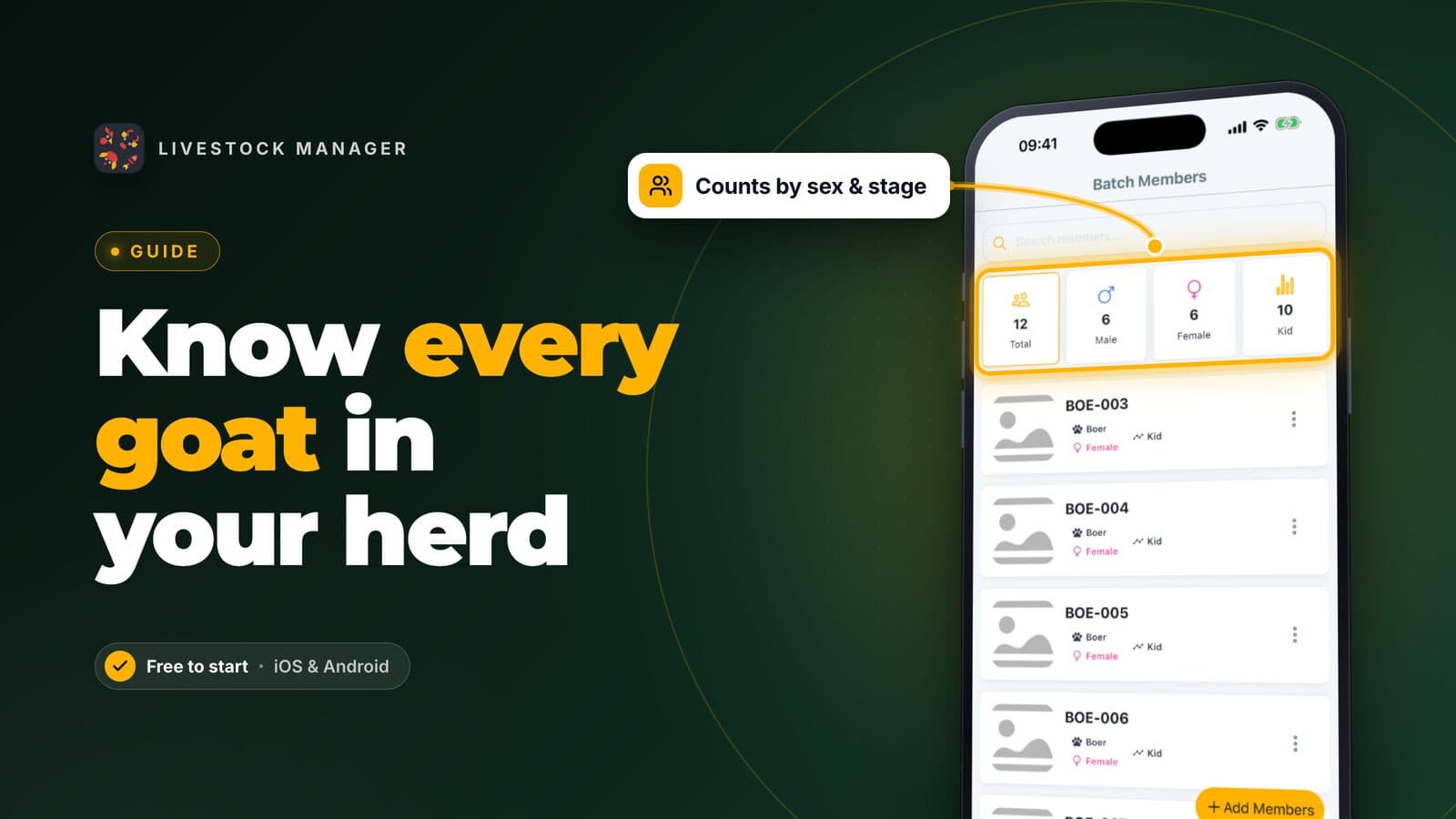
- Animals and batches. Add individual animals or whole batches across species.
- Daily records. Log eggs, milk, weight, water, deaths and more. Egg records count good and broken eggs and work out trays. Our lesson on recording eggs, milk and daily production shows the screens.
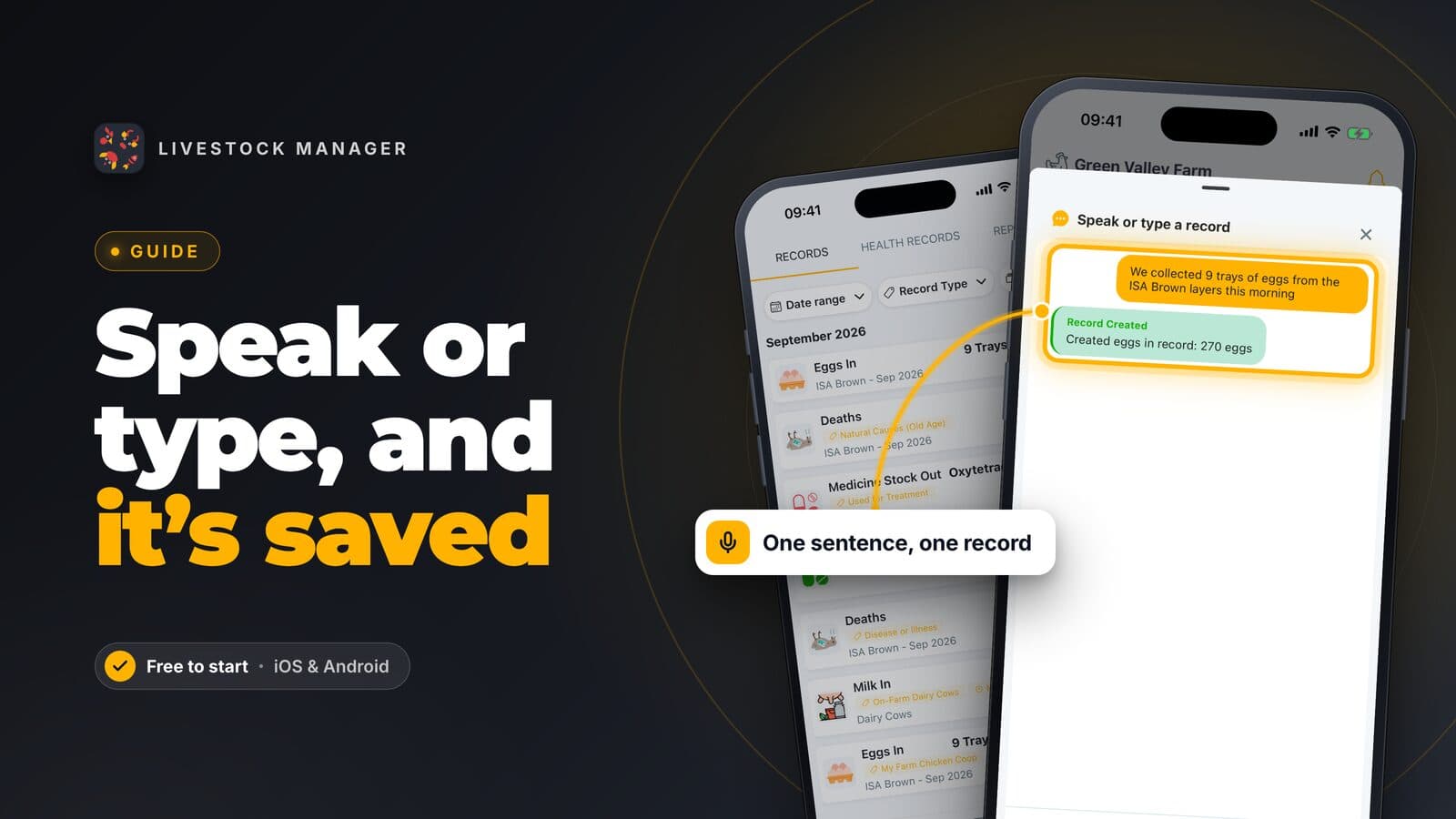
- Speak or type. On Home, say or type what happened, such as a treatment or a collection, and the app helps turn it into a record. Our lesson on recording by voice or text shows how.
- Health and medicines. Log treatments and vaccinations. The medicine store tracks stock, expiry and withdrawal periods.
- Breeding. Record matings and due dates.
- Feed store. Track feed stock and days left.
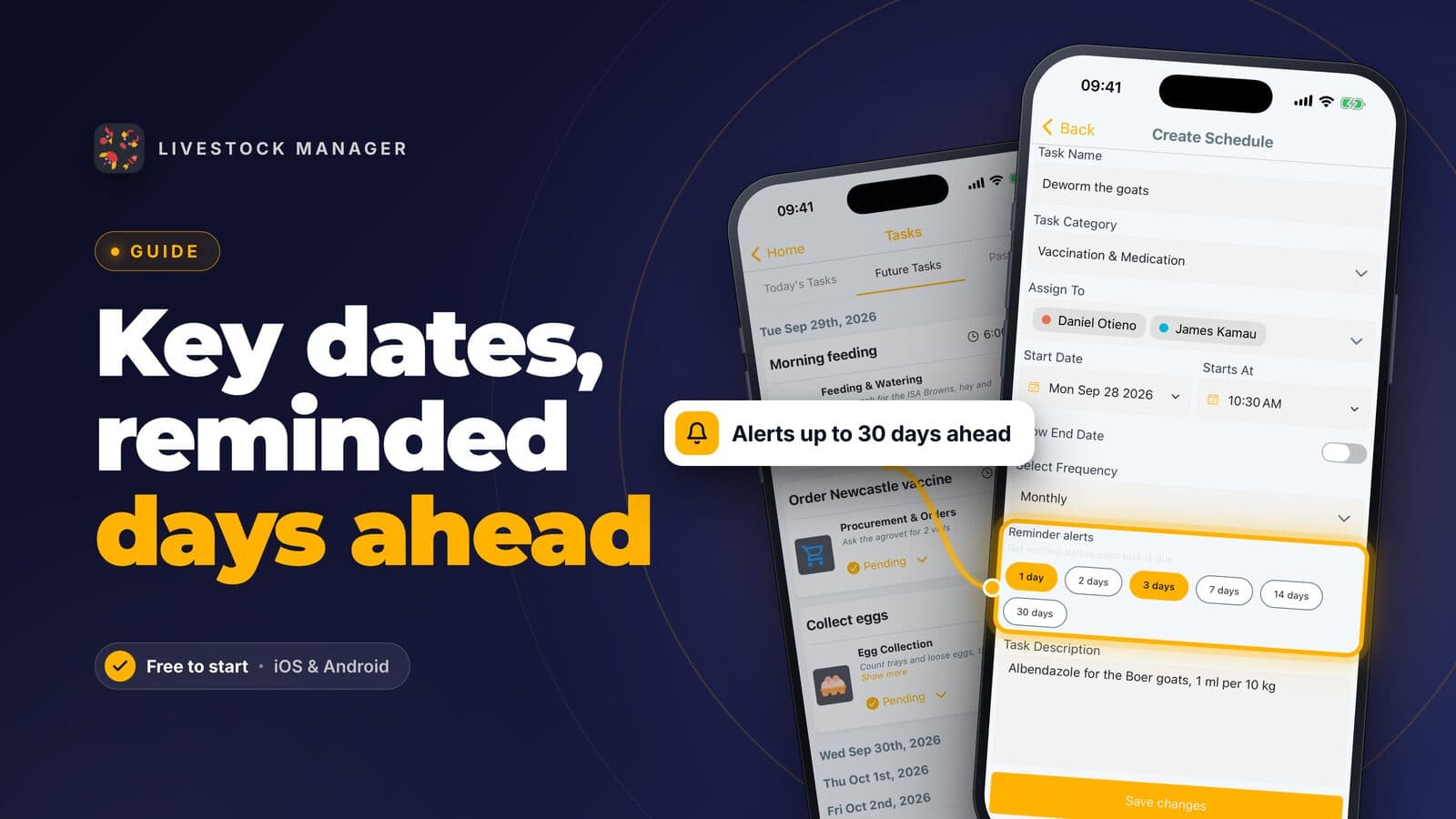
- Tasks and reminders. Schedule vaccinations, deworming and checks. Automatic records repeat routine entries for you. Our lesson on farm tasks and reminders shows how.
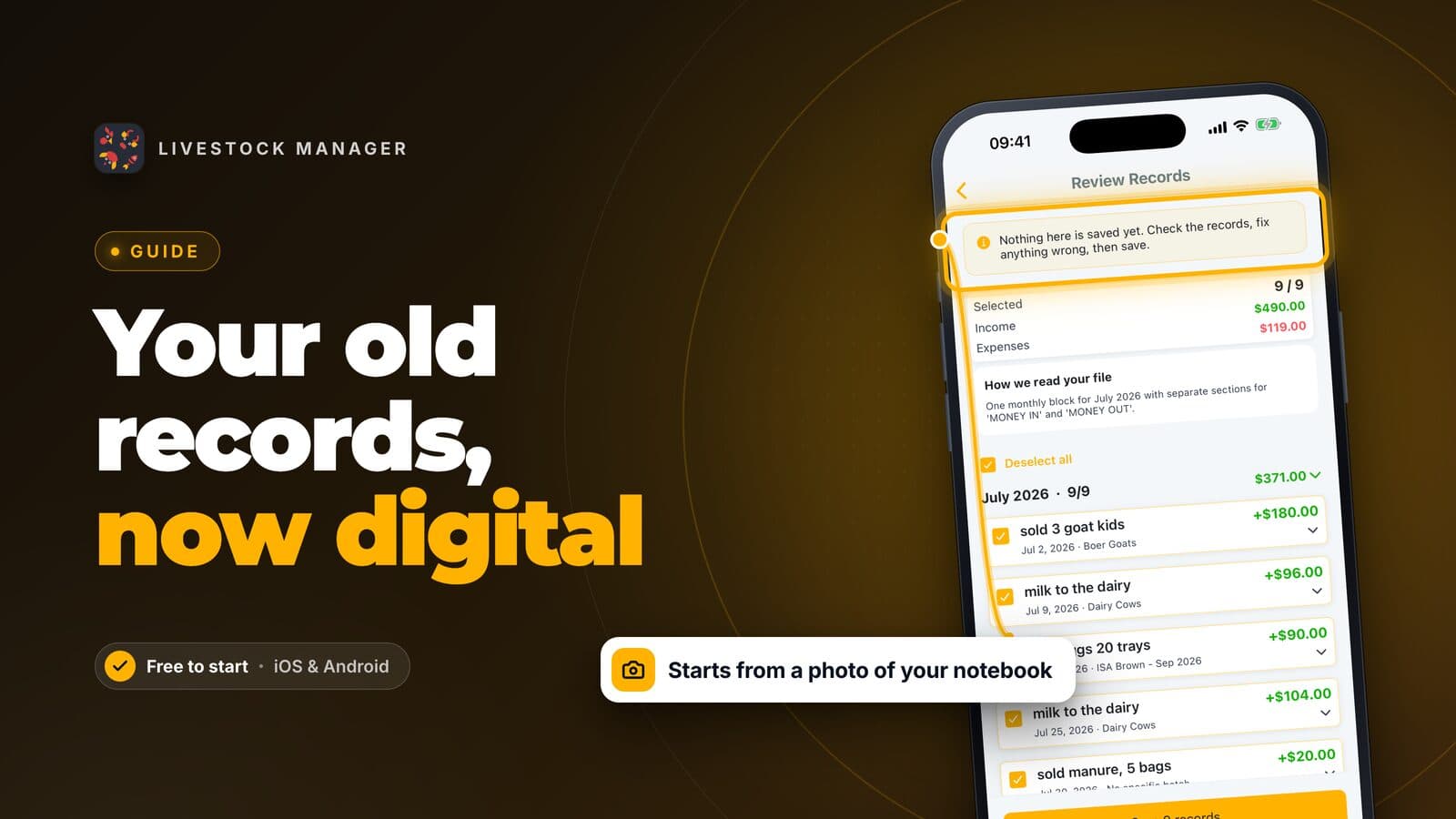
- Income and expenses. Log sales and costs, scan receipts, and manage customers and invoices.
- Reports. Download reports as PDF or CSV for your vet, bank or accountant.
- Team roles. Invite workers so everyone records in one place.
Because your records sit on Livestock Manager's servers, a lost or broken phone does not lose them. The trade-off is that the app needs an internet connection.
How long to keep records
Retention rules vary by country, and by whether the record is tax, health or movement related. Ask your tax authority and agriculture department. Two examples for tax records:
- In the United States, the IRS says to keep records for 3 years in most cases, and longer in others.
- In the United Kingdom, self-employed people must keep records for at least 5 years after the 31 January submission deadline.
If unsure, keep records longer. Storage costs little.
How to start
- Pick one enterprise. Start with your hens, or your milking cows.
- Record one thing daily for two weeks. Eggs, milk or deaths. Do it at the animal, not that evening.
- Use the same names. "Feed" every time, not "feed" and "inputs".
- Add health and money next. Log the next treatment and the next sale.
- Review for ten minutes each week. Fix errors early.
- Skip the backlog. Start from today. Enter old records only if you need them.
Frequently asked questions
What records should a livestock farm keep?
Keep six groups: animal records, health and treatment records, breeding records, production records, feed records, and income and expenses. Together they show what each animal or batch cost, what it produced, and what it earned.
Is a spreadsheet good enough for farm records?
A spreadsheet works for one small enterprise if you enter data every day. It gets harder with several species, several workers, or a need for reminders, stock levels and reports.
How long should I keep farm records?
It depends on your country and on the record. Tax authorities set their own periods, and livestock health and movement rules differ by country and species, so check with your tax authority and your agriculture department.
What is the easiest way to start keeping farm records?
Pick one enterprise, such as your laying hens, and record one thing daily for two weeks. Add health, feed and money records once the habit holds.
Do I need a connection to use Livestock Manager?
Yes. The app needs an internet connection to save and load records. If your signal is weak, jot notes and enter them when you are back in range.
Sign up free at livestockfarm.co and enter your first records today.