Is Livestock Farming Profitable? An Honest Look
On this page
Livestock farming can be profitable, but nothing guarantees it. Published cost data shows margins that swing from year to year, and even large, well-run operations sometimes lose money. Your result depends on what each animal costs you and what it returns.
This article gives the sourced numbers that exist, then shows how to run the same arithmetic on your own farm.
What the published data shows
Treat these figures as examples of how tight margins can be, not as forecasts. They come from the United States, and your costs and prices will differ.
- Dairy, 2024. On Illinois dairy farms, University of Illinois farmdoc daily reported an average net milk price of $21.63 per 100 pounds against a total economic cost of $23.56. That left a net return of negative $409 per cow. Feed was about 49 percent of the total economic cost.
- Beef cow-calf, 2024. USDA cost-and-return data, summarised by Ohio State and Farms.com in 2026, put revenue at $1,130 per cow and operating costs at $691. The remaining $439 is the return above operating costs only. It does not pay for land, unpaid labour or capital, so it is not profit.
- Broilers. University of Alaska Fairbanks Cooperative Extension (reviewed 2015) states that feed is the largest cost, at 60 to 75 percent of the total.
Two lessons follow. Feed is the largest cost line in most livestock enterprises, so small changes in feed price or efficiency move the result more than almost anything else. And the word "profit" can mean very different things: cash left over, or a return after paying for your own labour and capital.
Why a farm can look profitable when it is not
A farmer sells ten goats at a good price and calls it a good year. The sale price leaves out:
- The feed those goats ate for months
- The kids that died before weaning
- The vet visit and the medicine
- The doe that never conceived and was fed anyway
- The farmer's own unpaid labour
Cash in hand is revenue. The gap between revenue and profit stays invisible unless someone writes costs down as they happen. By sale day, nobody remembers what each animal consumed.
Losses show up in extension budgets too. Nebraska's sheep and goat budget templates (2021) assume 11 percent of kids die before weaning. Your own figure may be lower or higher, but every dead animal has already eaten feed.
Work out your own break-even
Published averages tell you little about your farm. Your own numbers do. Use this method for each batch or group of animals.
| Number | How to calculate it | What it tells you |
|---|---|---|
| Total cost | Purchase price plus feed, health, labour and everything else | What the batch cost |
| Break-even price | Total cost divided by animals sold | The lowest price per animal that covers costs |
| Mortality rate | Animals lost divided by animals started | How much of the cost the survivors must carry |
| Margin per animal | Average sale price minus break-even price | Whether growing the flock helps or hurts |
An illustrative example, using round numbers and not real prices. Say you raise 100 broilers and the whole batch costs 5,000 in your currency: chicks, feed, medicine and labour. If 5 birds die, you sell 95, so your break-even is about 52.6 per bird. Sell them at 60 and each bird leaves about 7.4 margin. Sell at 50 and you lose money on every bird sold. If feed costs 10 percent more next time, your break-even rises with it, which is why feed records matter.
Run the same sums for cattle, goats or layers. For hens, divide total cost by eggs sold instead of animals sold.
Where the margin usually hides
When a farm is busy but not profitable, the cause is usually one of these.
Feed. Feed is the biggest line, so record what you buy and what each group eats. An animal that eats without producing costs as much as one that does. Breeding females that fail to conceive are the classic case, and cattle breeding records make them easier to spot.
Losses. A dead animal returns nothing and its feed is gone. Track deaths by age group. Deaths among newborns suggest a housing or supervision problem, while deaths among growers suggest parasites, nutrition or disease. For health decisions, follow your vet and local regulations.
Timing. Prices for many products change through the year. Recording the price you got for each sale, and when, shows whether you sell at the wrong time. Selling when you need cash instead of when prices are good gives margin away.
Middlemen. Every intermediary takes a cut. Some farms earn more per animal by selling part of their output directly, and selling farm products directly explains how to start.
Unpaid labour. If the farm cannot pay for the hours it takes, it is a job that pays in livestock, not yet a business.
Cash flow before profit
Even a sound enterprise can fail by running out of cash before the first income. Layers and breeding stock cost feed for months before they earn, and slow-growing animals hold capital for longer. Plan the cash to reach first sales, and expect early batches to do worse while you learn. Beginners often prefer species with shorter cycles because they get more chances to learn, as the guides to poultry farming and goat farming explain.
Tracking the numbers in Livestock Manager
The arithmetic is easy. Recording is the hard part, especially when you are tired at the end of a day.
In Livestock Manager you can:
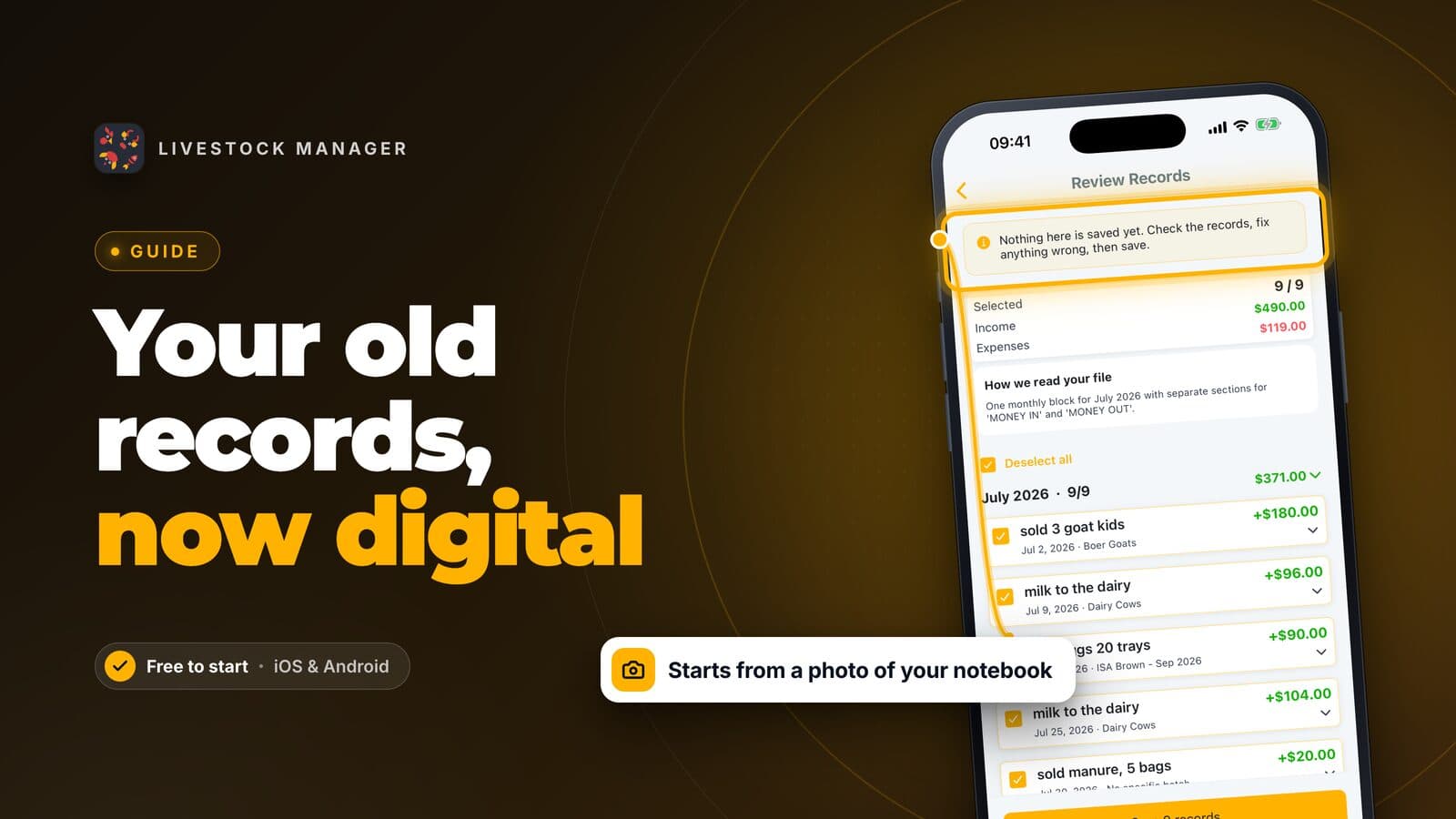
- Record income and expenses against a batch, with categories such as feed and medication, and scan a receipt to fill in the amount, date and category
- Filter transactions by batch and date range to see income, expense and balance for that group
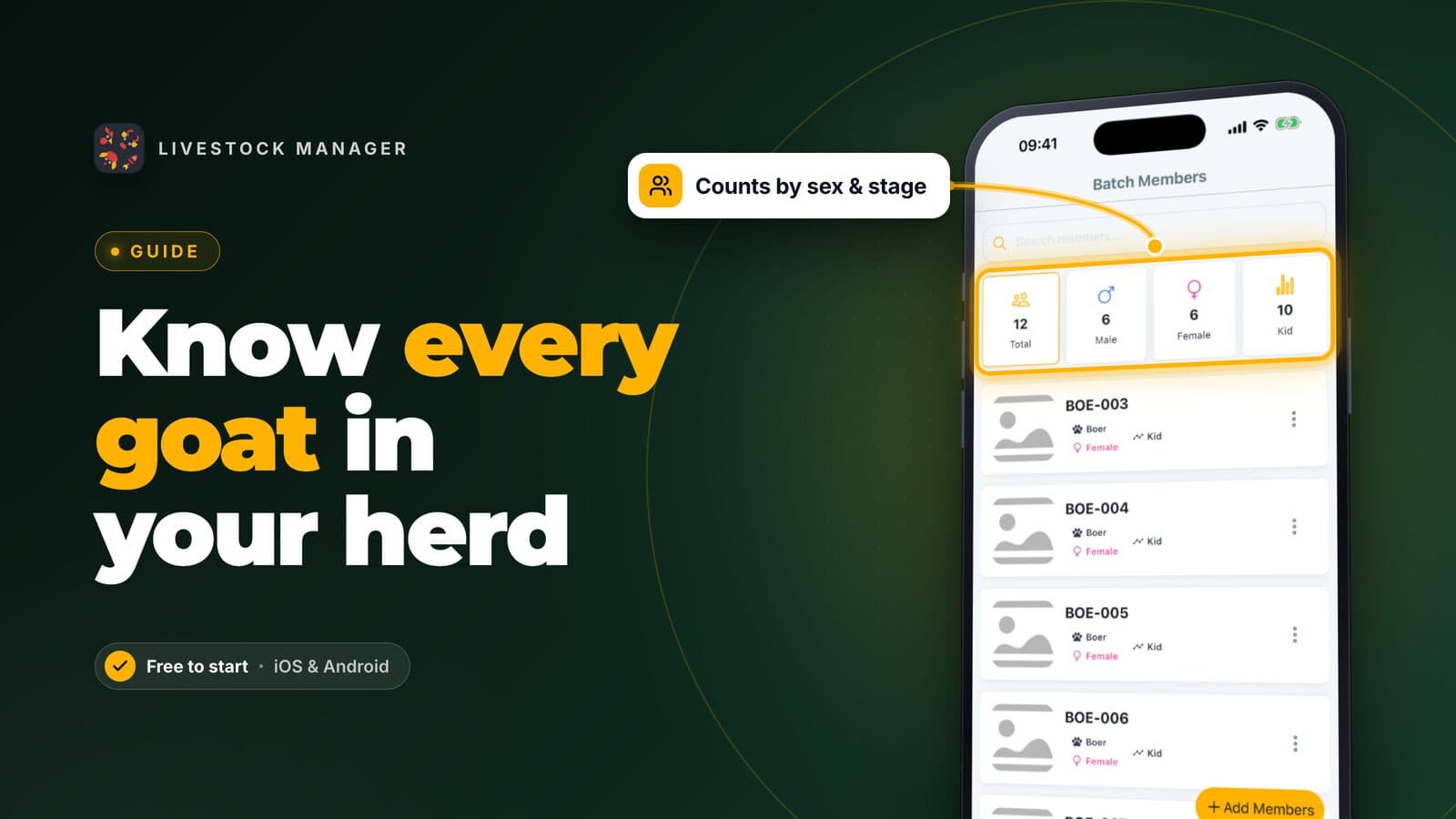
- Keep feed stock in the feed store and record daily deaths, eggs, milk and weights on each batch
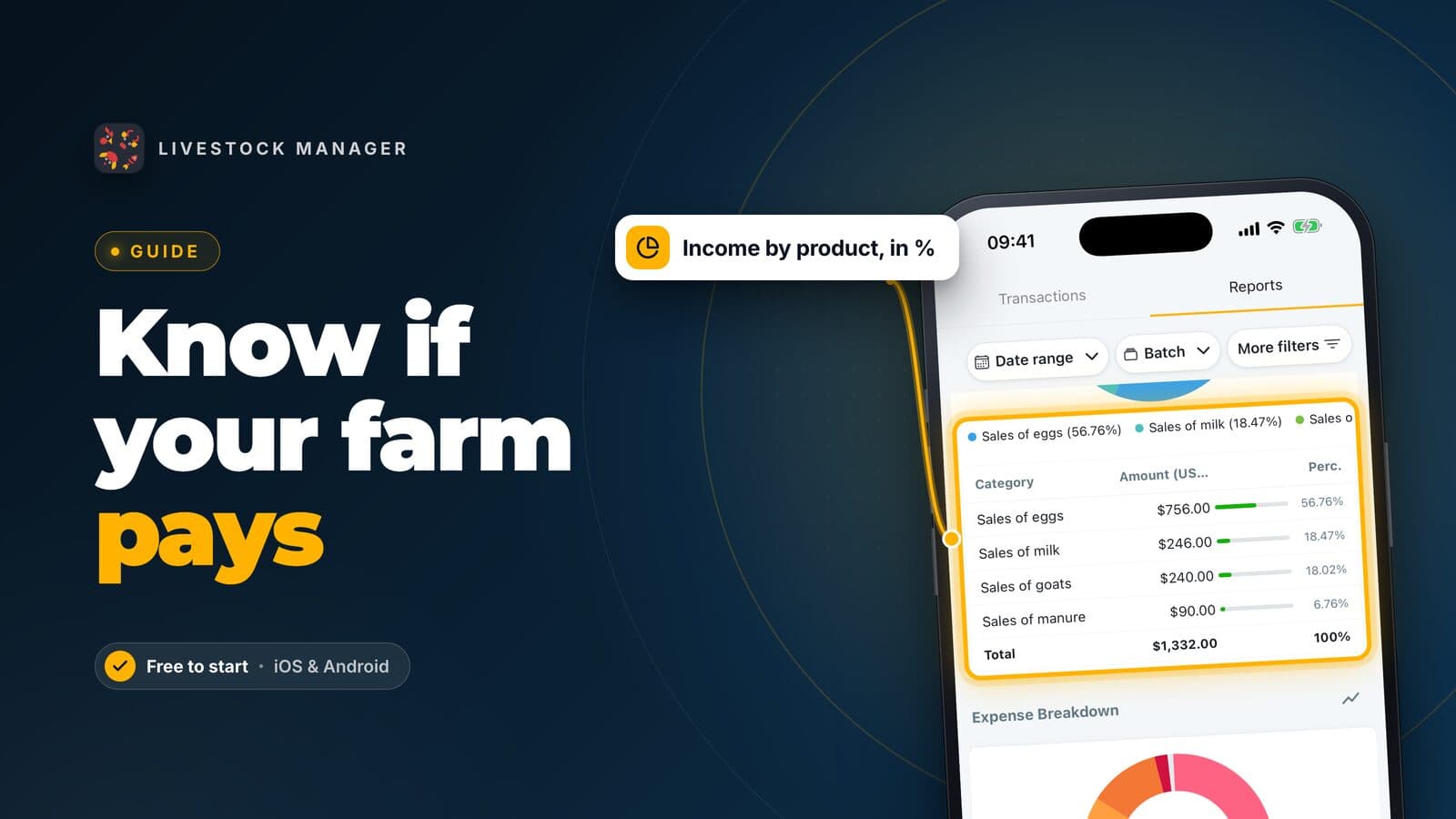
- View a farm dashboard with net profit, income and expense over a date range
- Download reports as PDF or CSV, including financial and sales reports, so you can check the numbers or share them with a bank or accountant
Livestock Manager needs an internet connection, and some features, including report downloads, depend on your plan. It records what you enter. It does not promise a profit, but it shows you where the money is going. For habits that work in any tool, see the farm record keeping guide.
So is it profitable?
It can be, when several things are true at once:
- Your cost per animal is below the price you can get
- Losses are low enough that survivors are not carrying the dead
- Breeding females produce, and those that do not are culled
- You sell when the market is good, not only when you need cash
- You have enough cash to reach the first real income
Farms that fail usually fail on the same few points, and usually because nobody measured them. Start with total cost, break-even and mortality for one batch. Within a season you will know whether it is worth growing.
Frequently asked questions
Is livestock farming profitable?
It can be, but no species or system guarantees a profit. Published cost studies show that margins swing with feed and market prices, and some years many producers lose money. Whether your farm is profitable depends on your cost per animal, your losses and the price you get.
What is the biggest cost in raising livestock?
Feed. University of Alaska Fairbanks extension puts feed at 60 to 75 percent of broiler production cost, and University of Illinois farmdoc put it at about 49 percent of the economic cost of producing milk on Illinois dairy farms in 2024. The share varies by species, system and year.
How do I calculate break-even for a batch of animals?
Add every cost for the batch, including feed, medicine, purchase price and hired labour. Divide by the number of animals you expect to sell, and that is the price per animal you need just to cover costs. Anything above it is margin.
Why do some farms make money on paper but not in the bank?
Sales are revenue, not profit. Feed, losses, medicine and unpaid labour often go unrecorded until the animal is sold, so the year feels profitable when it was not. Writing costs down as they happen closes the gap.