Goat Farming for Beginners: Start a Meat or Dairy Herd
On this page
Start with meat or dairy, not both, and begin with a handful of healthy does in dry housing behind strong fencing. Most early losses come from worms, wet ground, weak fences and unrecorded problems, not from the breed you chose. The rest of this guide covers what to decide before you buy and what to track once the goats arrive.
Meat, Dairy, or Both
Your first decision is what the goats are for, because it shapes everything after it.
Meat goats are the simpler business. You breed does, raise kids to market weight and sell them. Income arrives in lumps a few times a year. Where they are available, Boer and Boer crosses are the usual commercial choice. Many regions also have a local breed that copes with local parasites and climate better than imported stock, so do not dismiss it for growing slowly.
Dairy goats pay daily but demand daily labour. Milking happens every day, usually twice. Line up a buyer, a cheese process or a market stall before you have milk to sell.
Dual-purpose herds mean two operations, two skill sets and two markets while you are still learning one. Pick one, stabilise it, then expand.
Buying Your First Goats
Buy fewer animals than you can afford. Five to ten does is enough to learn on, and cheap enough that early mistakes do not end the business.
Check every animal before you buy:
- Teeth and age. Sellers overstate how many productive years a doe has left. Heavily worn incisors point to an older animal.
- Udder. Lumps, hardness or lopsidedness suggest past mastitis.
- Feet. Overgrown or rotten hooves suggest wet housing, and the problem comes home with the animal.
- Body condition. You should feel the ribs under light pressure without seeing them clearly.
- The rest of the herd. Coughing, scouring or dull coats in the seller's other animals show what you would be buying into.
Buy the buck last, and buy him better than the does. He fathers every kid on the farm, so he is the cheapest way to improve the herd or the fastest way to spoil it. If you cannot afford a good buck, borrow or share one.
Housing and Fencing
Goats need modest shelter but dry, well-drained ground and secure fences.
Space. Cornell's goat facilities guide recommends at least 25 square feet per goat in pens, or 12 to 15 square feet per doe indoors when she also has an outdoor yard. Treat these as minimums.
Fencing. The same guide puts woven net wire at 42 to 48 inches high, with 8-inch vertical mesh for polled goats and 12-inch for horned goats. Goats test every fence, and one that escapes into a neighbour's crop costs more than the fence, so build it stronger than you think you need.
Dry and draft-free. Cornell suggests about 6 inches of bedding on a cement floor and a few inches of gravel or pallets where moisture collects. Keep ventilation open but avoid draughts at animal height.
A separate kidding pen. The Merck Veterinary Manual calls for a clean, dry, warm, draft-free area for kidding. It names hypothermia as a leading killer of newborns, especially in cold climates, so dry and warm each kid quickly.
Feeding Goats
Goats browse more than they graze. They eat shrubs, leaves and tree fodder alongside grass, which makes scrub land cheap to use. Feed is still your largest cost, and it is where profit is won or lost.
- Amount. Sheep and goats typically eat 2 to 4 percent of their body weight in dry matter daily, and smaller animals eat a higher percentage, according to University of Arkansas Extension. Late-pregnant and milking does need more, so raise their ration before the demand arrives.
- Water. Keep clean water in front of them at all times.
- Minerals. Use a goat mineral, not a sheep mineral. Mississippi State Extension explains that sheep and goats differ sharply in copper needs, so a diet for one risks deficiency or toxicity in the other.
- Changes. Move to new feed gradually, over about a week, to avoid digestive upsets such as bloat.
Track feed cost against what each group produces. A few poor animals can eat the margin of the rest.
Breeding and Kidding
Goat reproduction follows a calendar you can plan around.
| Event | Typical timing |
|---|---|
| Heat cycle | About every 21 days |
| Heat duration | About 36 hours |
| Signs of heat | Tail flagging, more calling, swollen vulva |
| Gestation | About 150 days |
The Merck Veterinary Manual gives the 21-day cycle, 36-hour heat and 150-day gestation. It also notes that goats are seasonal breeders, though the season varies by breed and location. Ask your vet how often to rebreed does in your conditions.
Record the service date, the buck, the due date, whether the pregnancy was confirmed, and how many kids each doe raised. That last figure tells you which does earn their feed.
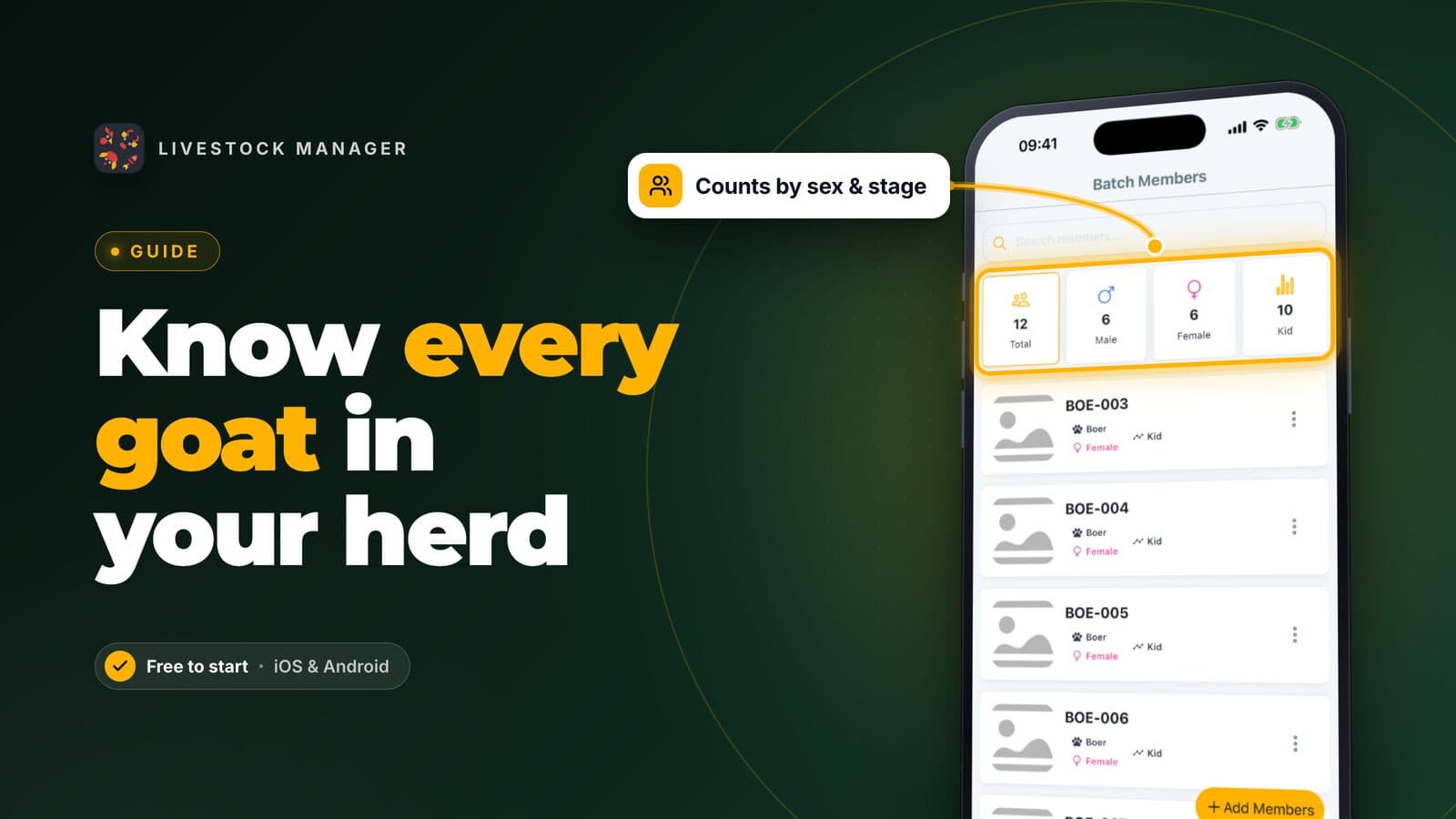
Livestock Manager lets you keep a profile for each goat and add breeding records with an expected due date. Add a task or reminder so you prepare the kidding pen and vaccinate on time. See our cattle breeding cycle calendar for the same approach applied to another species.
Worms and Other Health Basics
Internal parasites are the main health risk on most goat farms. The barber pole worm is the most economically important parasite of small ruminants on pasture, according to the University of Rhode Island's FAMACHA guide, and it causes anaemia that can kill.
- Deworm selectively. The FAMACHA card matches the colour of the inner eyelid to five anaemia categories, so you treat only animals that need it. Resistance has been reported to every current dewormer, and blanket dosing speeds it up.
- Manage pasture. SARE's parasite guide advises keeping forage above 3 to 4 inches, because most larvae stay in the lower grass, and resting pasture for 28 to 35 days.
- Dose by weight. The same guide notes goats often need a higher dose than sheep. Weigh the animal and follow your vet's instructions rather than guessing.
- Cull repeat offenders. SARE reports that roughly 80 percent of a herd's parasites are carried by 20 percent of the animals.
Vaccination
CD&T protects against enterotoxemia (types C and D) and tetanus. Extension sources broadly agree on the pattern. Mississippi State Extension says to vaccinate does before birth so kids receive protection through colostrum, and to give adults an annual dose. Kid timing depends on whether the dam was vaccinated, so ask your vet for a schedule for your herd.
Hooves and quarantine
Trim hooves when they need it. NC State Extension notes that frequency depends on terrain, age, nutrition and breed, and that goats on small, clean paddocks need trimming more often. Also isolate new animals before they join the herd, and ask your vet how long to hold them.
Medicine and withdrawal periods
Record every treatment. Drugs carry withdrawal periods, and meat and milk withdrawals can differ, so confirm them with your vet and local rules before you sell. Livestock Manager's health records and medicine store track stock, expiry and withdrawal dates. Our lesson on health records and medicine stock shows the screens.
Records That Decide Whether You Profit
Skip made-up benchmarks and measure your own herd. Four numbers matter most:
- Kids weaned per doe bred. Compare doe against doe.
- Kid deaths between birth and weaning. A spike points to housing, nutrition or supervision.
- Feed cost per animal per month. This is the cost that quietly grows.
- Age and performance. Note does past breeding age or that repeatedly fail to conceive.
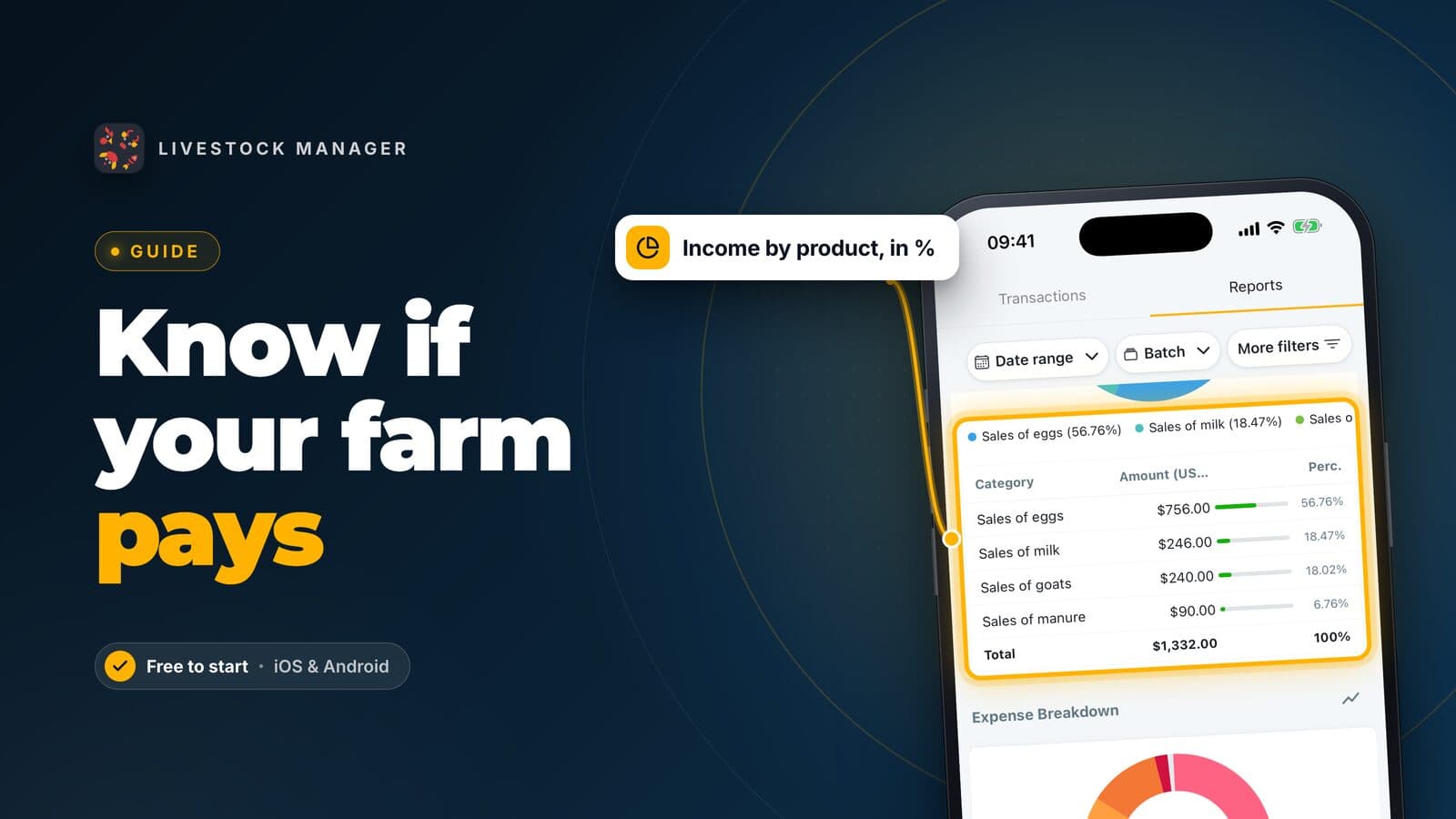
Weights are the easiest way to see growth and condition trends. Livestock Manager's daily records cover weight, and income and expenses show whether the herd covers its costs. A notebook works too if it does not get lost. Our farm record-keeping guide shows what to write down and when. The app needs an internet connection to save records.
Start Small and Count Everything
Buy fewer animals than you can afford and the best buck you can. Keep the ground dry, watch for worms and write down which does earn their feed. If you are weighing goats against another species, read our poultry farming guide for beginners.
Frequently Asked Questions
How long are goats pregnant?
Gestation in goats averages about 150 days, or roughly five months. Record the service date so you can work out the due date and prepare a clean, dry kidding pen ahead of time.
How much space does a goat need?
Extension guidance from Cornell suggests at least 25 square feet per goat for pens, or 12 to 15 square feet per doe indoors if she also has an outdoor yard. Give more where you can, because crowding raises stress and disease.
How do I control worms in goats without overusing dewormer?
Check for anaemia with the FAMACHA eyelid chart and treat only the animals that need it, since resistance has been reported to every current dewormer. Rotate pasture and keep grazing height above three to four inches, and ask your vet to build a plan for your area.
What vaccine do goats need?
The core vaccine is CD&T, which protects against enterotoxemia (types C and D) and tetanus. Extension schedules commonly cover kids, pregnant does and annual boosters for adults, but confirm the exact timing with your local vet.
Should a beginner keep meat goats or dairy goats?
Meat goats are the simpler start because they need no daily milking. Dairy goats need milking twice a day and a plan to sell or process the milk, so pick one and get it stable before you add the other.