How to Sell Farm Products Directly to Customers
On this page
- Start With What You Already Sell
- Check the Rules Before You Advertise
- Price Against Retail, Not Wholesale
- Find Your First Customers
- Take Orders Without Building a Website
- Record Sales, Customers and Invoices
- Plan Delivery So It Does Not Eat the Margin
- Keep the Customers You Win
- Start This Week
- Frequently Asked Questions
Selling directly means you set the price and keep the margin a trader would have taken. Start with one product that needs little processing, usually eggs. Price against local retail, sell first to people who already know you, and keep one reliable place where orders are recorded.
Direct selling does not have to replace wholesale. Extension services and the USDA's local food resources describe it as one channel among several, and the returns depend on your product, your market and your costs. Work out your own numbers before assuming it pays more.
Direct customers also tend to pay on delivery rather than on trader terms. Money arriving weekly instead of after the season changes what a farm can afford to do.
Start With What You Already Sell
Look at what leaves your farm now and ask which of it a household would buy directly.
- Eggs. The easiest start almost everywhere. They are bought weekly and need no processing, and buyers notice fresh ones.
- Milk. Demand is strong where direct sale is legal, but milk spoils fast and the rules vary sharply.
- Live birds or animals. Demand peaks around festivals and holidays.
- Meat. The highest value and the most regulated.
Begin with the product that needs the least processing and paperwork.
Check the Rules Before You Advertise
Food safety, licensing and labelling rules differ by country, and often by region or state. Eggs, dairy and meat are usually treated differently, and meat and raw milk are commonly the strictest. Some places require registration, inspection, approved slaughter facilities or specific labels before you can sell.
This is not legal advice. Ask your local food-safety authority, and start with these:
- United States: USDA Food Safety and Inspection Service for meat and poultry, and the FDA for eggs and other foods.
- United Kingdom: the Food Standards Agency.
- Elsewhere: your national ministry of agriculture or health, and the FAO for general food-safety guidance.
Price Against Retail, Not Wholesale
New direct sellers usually price too low because they anchor on what traders pay. Your customer is comparing you to the shop where they would otherwise buy.
- Find the local retail price of the equivalent product.
- Price at or slightly below it, not far below.
- Check that the price covers your cost per unit with a real margin.
If you do not know your cost per unit, work it out first. Is livestock farming profitable shows how. Do not compete on price alone. Farms that keep direct customers win on freshness, reliability and knowing where the food came from.
Find Your First Customers
The first twenty customers come from people who already know you.
- Be specific. Not "I have eggs" but "I have thirty trays every Friday at this price, and I can hold one for you."
- Ask for introductions. A happy customer's neighbour is your best prospect.
- Be in the same place at the same time each week. Predictability is part of the product.
- Use the group chats that already exist. Neighbourhood, workplace and community groups are where households coordinate buying. One clear weekly message often works better than any advertising.
Take Orders Without Building a Website
To start, you need a phone number, a written list of what is available this week with prices, and a notebook. That runs direct sales for a long time.
Two things break it as you grow. Orders arrive across several chats and get lost, and you retype "what do you have and how much?" to each person. One link that lists your products and takes orders solves both.
Livestock Manager includes an online farm shop where you can list products and receive orders. Availability of shop features is still rolling out, so check the app for what your farm can use today. Whatever tool you choose, keep orders in one place and check it at a set time each day.
Record Sales, Customers and Invoices
Twenty regular households is a business. Twenty one-time buyers is a string of transactions. To know which you have, record each sale against a named customer.
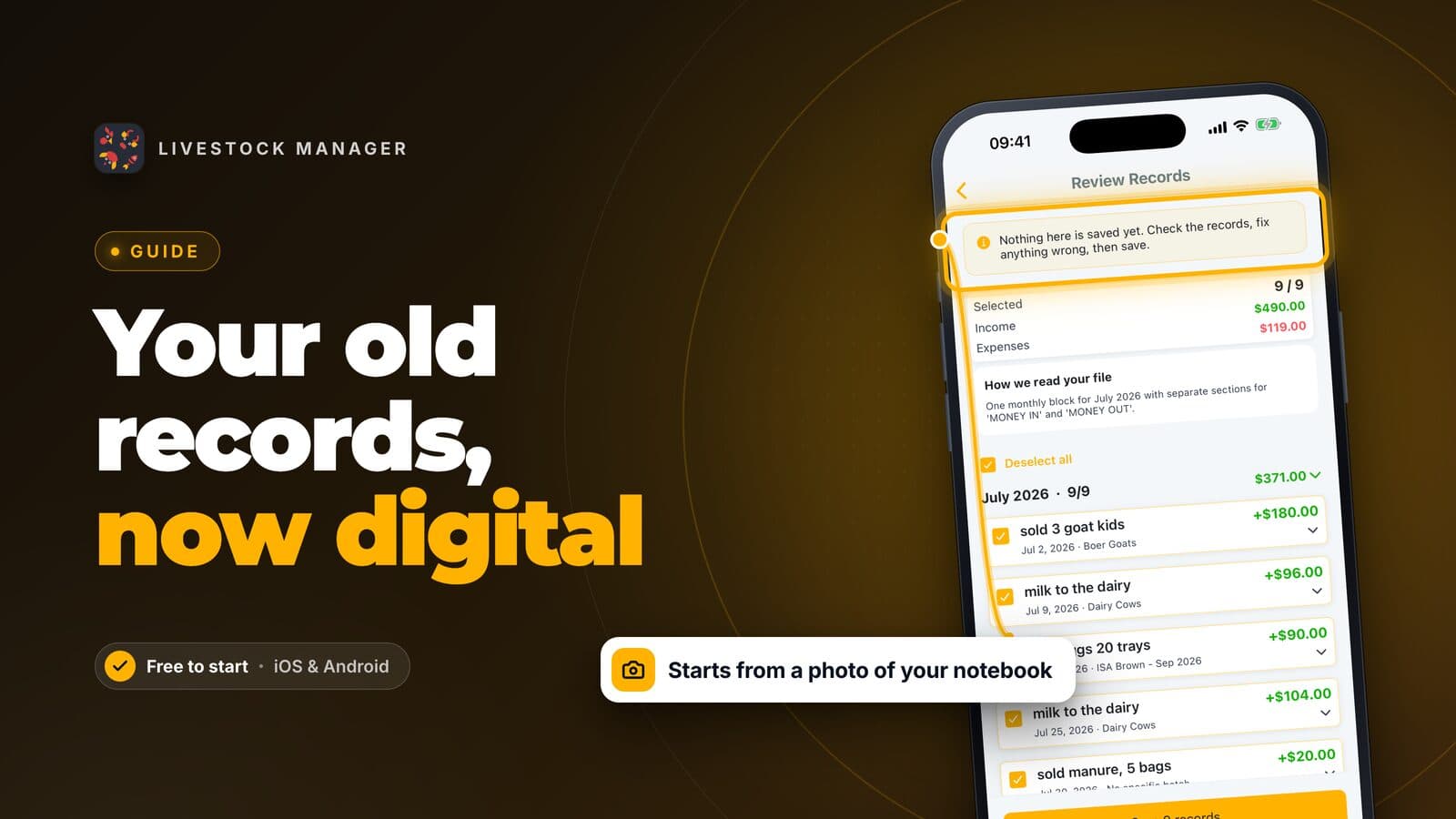
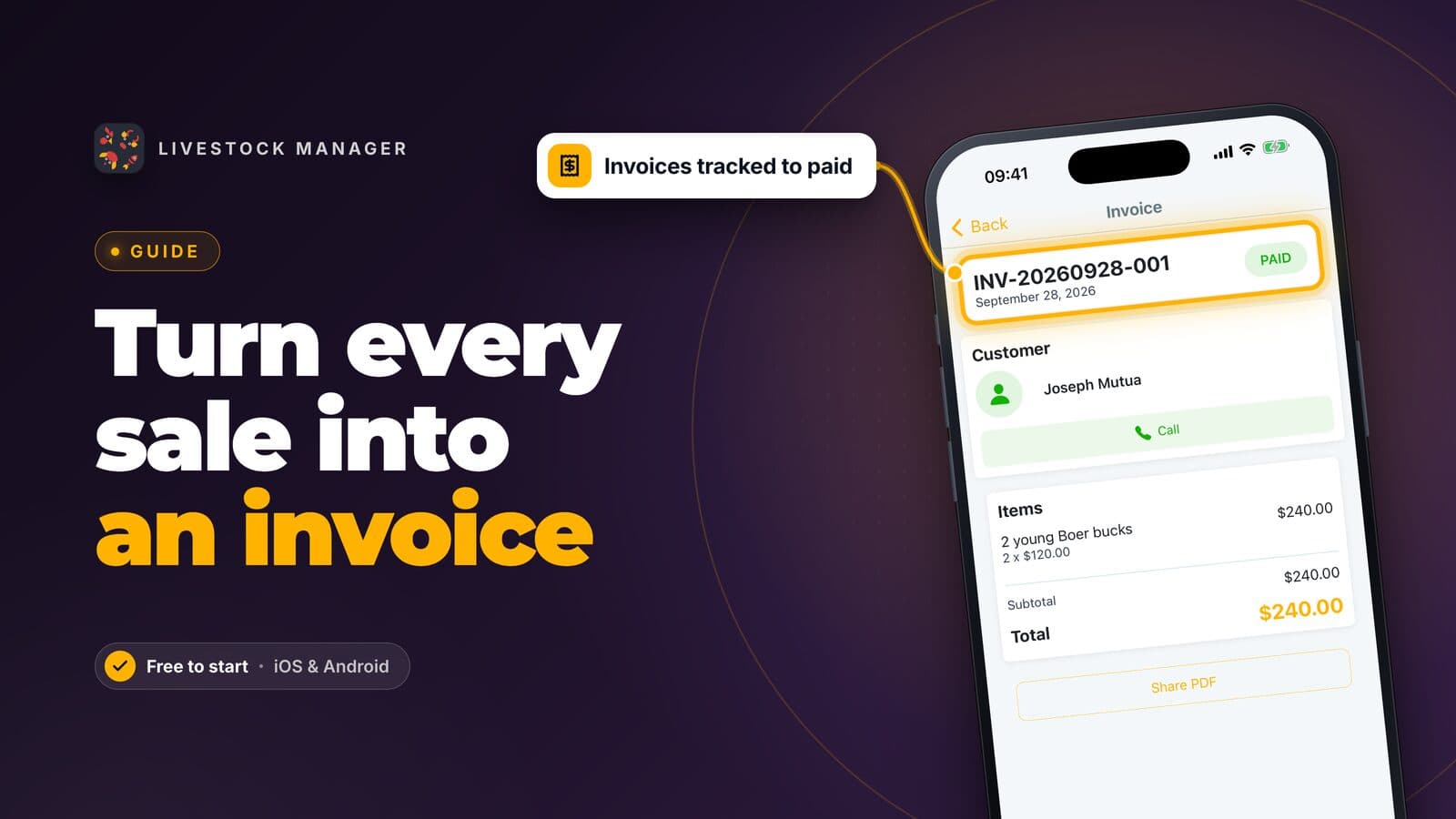
Livestock Manager has sales, customer contacts and invoices. You can log a sale with its items, keep a customer's history, create an invoice for a sale and mark it paid, and see the income appear alongside your other finances. Bigger buyers such as shops, hotels and caterers usually expect an invoice. For the wider habit, see farm record keeping.
Plan Delivery So It Does Not Eat the Margin
Fuel and hours are easy to underestimate and easy to forget to charge for. Three approaches hold up:
| Approach | Best for | Watch out for |
|---|---|---|
| Collection from the farm | Cheapest and simplest | Set fixed hours or you are interrupted all day |
| Fixed weekly route | Customers spread across an area | Group orders by area and day |
| Central pickup point | Towns with several customers | Same place and time every week |
Set a minimum order that justifies a delivery and hold to it. One tray delivered across town costs more than it earns.
Keep the Customers You Win
Direct customers leave mostly because of unreliability, not price. Promise less than you expect to produce. Tell customers early when you cannot supply, because a message on Wednesday costs less than silence on Friday. Keep size, cleanliness and packaging consistent, and remember what each household buys.
Start This Week
Pick one product and work out its cost per unit. Set a price against local retail. Tell fifteen people exactly what you will have and when, then deliver what you promised. After a month you will have real numbers on whether direct selling works for your farm.
Frequently Asked Questions
Do I need a website to sell farm products directly?
No. A phone number, a weekly list of what you have with prices, and one place to record orders is enough to start. Add an online shop or ordering link when orders scatter across several chats or you keep retyping the same list.
How should I price products I sell direct?
Compare against the local retail price of the same product, not the wholesale price you are used to. Price at or slightly below retail, and confirm the price covers your cost per unit with a real margin.
Do I need a licence to sell eggs, meat or milk directly?
Often yes, and the rules differ by country and region. Meat and milk are usually the most regulated, so check with your national or local food-safety authority before you advertise. This article is not legal advice.
How do I keep track of who bought what?
Record every sale against a named customer, with the items, quantity and date. Livestock Manager has sales, customers and invoices for this, so repeat orders and unpaid balances are easy to find.
How do I avoid losing money on delivery?
Set a minimum order for delivery and group deliveries by area on fixed days. Collection from the farm or a shared pickup point costs the least.