Best Low-Budget Farming App (2026)
On this page
For a farmer on a tight budget, Livestock Manager is our top pick. It has a free plan, and it puts animals, feed, medicine and money in one app made for small and medium livestock farms. If you grow mainly grain, Bushel Farm fits better. If you raise cattle or sheep, look at CattleMax (cattle) or AgriWebb (cattle and sheep).
Disclosure: Livestock Manager is our app. We checked the other tools' prices and features on their own websites on 2026-09-30, and prices can change.
What budget farmers need from a farming app
Price is only part of the cost. Judge an app on these points.
- A free plan you can really use. A short trial tells you little about a slow farm month.
- A cheap first paid step. You should not have to jump to a big plan for one feature.
- Your own species. A tool built for cattle stations wastes your money if you keep laying hens or goats.
- Feed and money in one place. Feed is usually the largest cost, so seeing what is left and what it cost matters most.
- Quick entry. If logging takes minutes, you will stop. Voice or text entry helps.
The real cost of paper and spreadsheets
A notebook and a spreadsheet cost nothing to buy. They cost time: you add up feed by hand and search old pages when a vet asks a question.
They also cost mistakes. A missed entry makes a feed count wrong. A broken formula hides a loss. Nothing reminds you that a vaccination is due. Our farm record keeping guide lists the records worth keeping whatever tool you choose. For very small flocks, a spreadsheet is a fair place to start.
Our picks
Livestock Manager: free to start, built for small and medium livestock farms
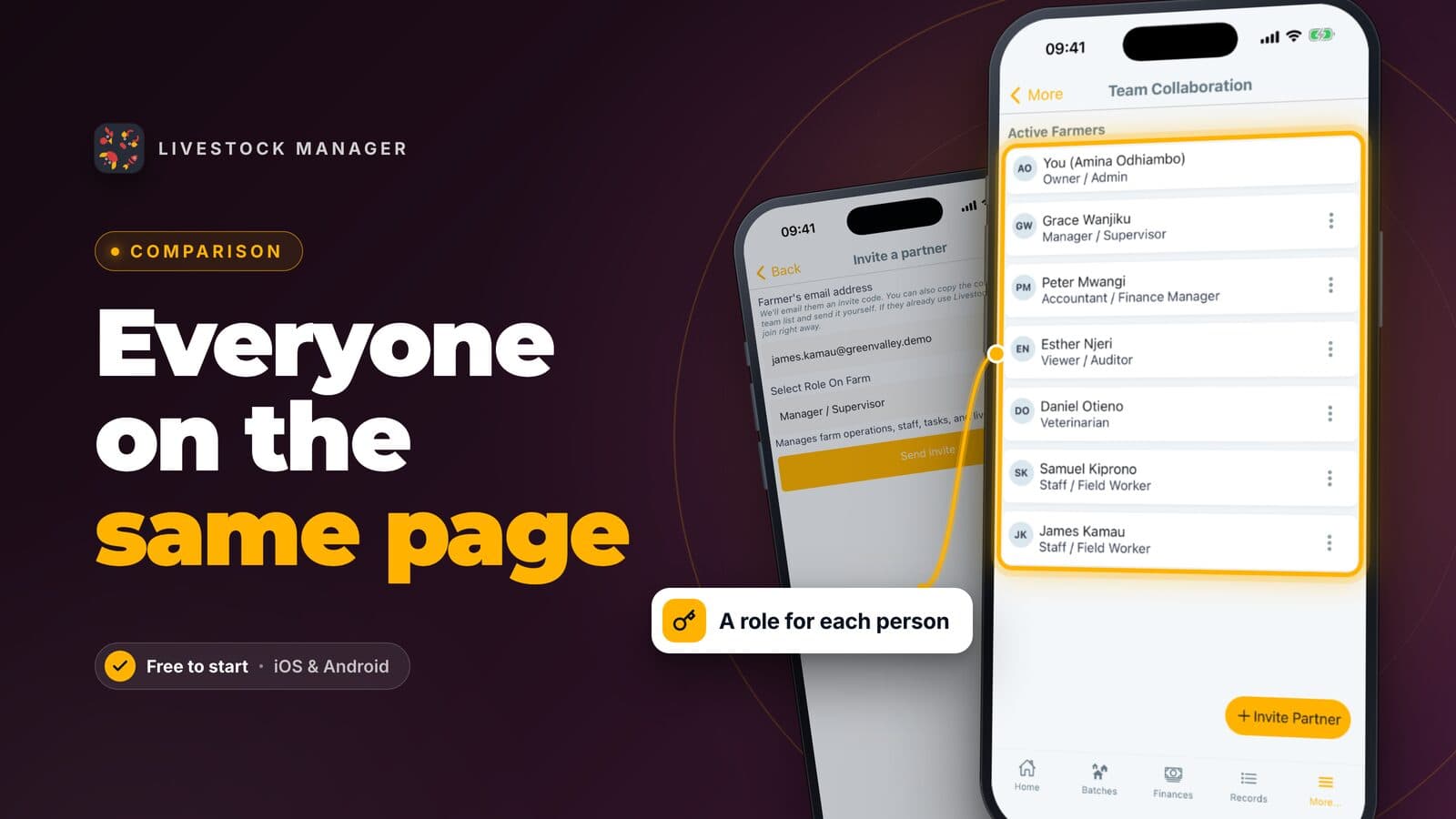
Livestock Manager runs on iOS, Android and the web, in 15 languages. The free Starter plan has no time limit. On Starter you get 2 batches per farm, 5 animal profiles per farm, 50 records a month, 30 transactions a month, 5 medicines and one team member. On Starter the web app is read-only, so you enter data on the phone.
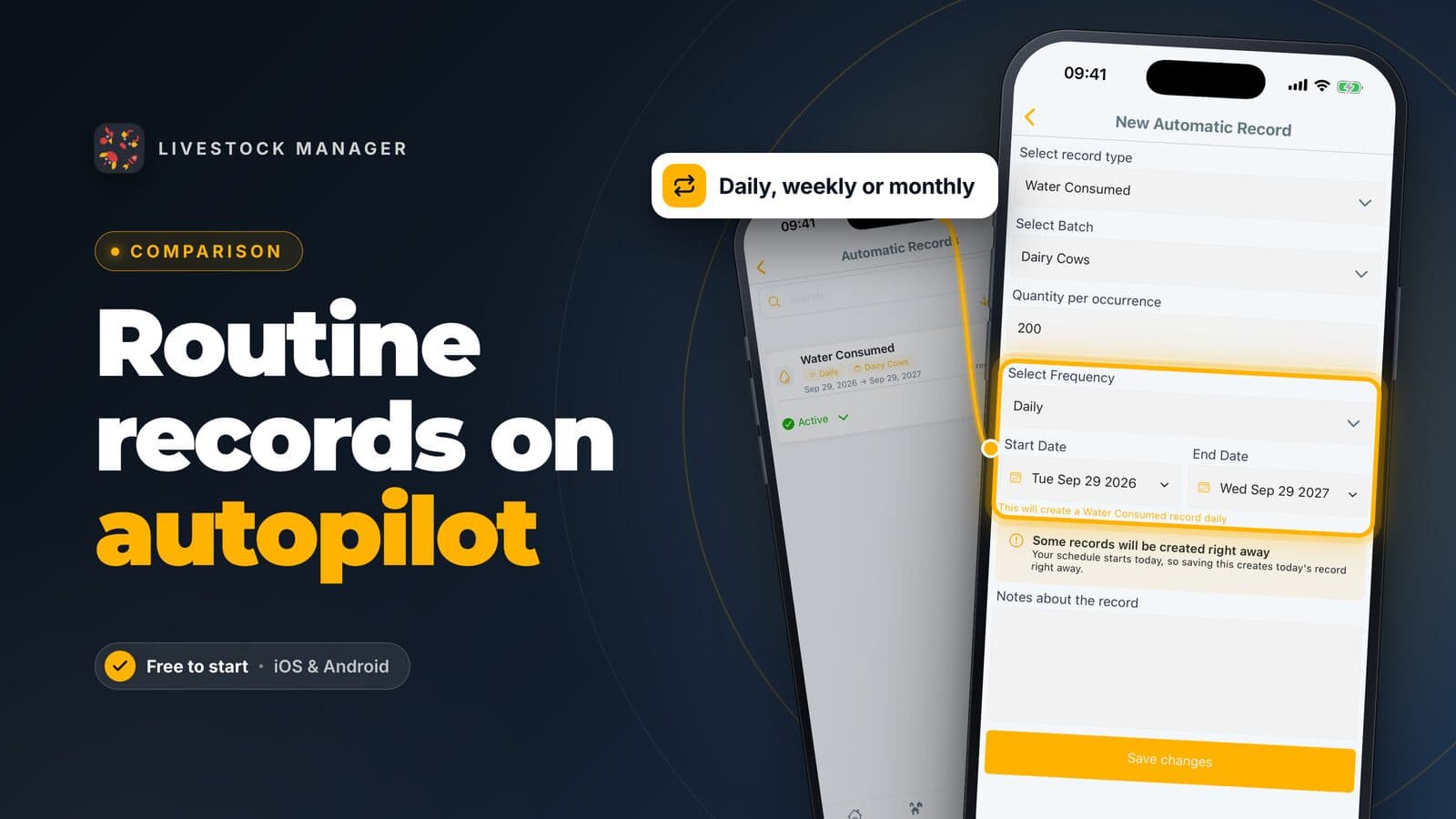
The cheapest paid step is Growth. It raises the limits (10 batches per farm, unlimited records and transactions) and adds invoicing, automatic records, and team invites for up to 3 people including you. Scale allows 10. We do not print prices here, so see the pricing page for the current price in your currency.
What it does for a tight budget:
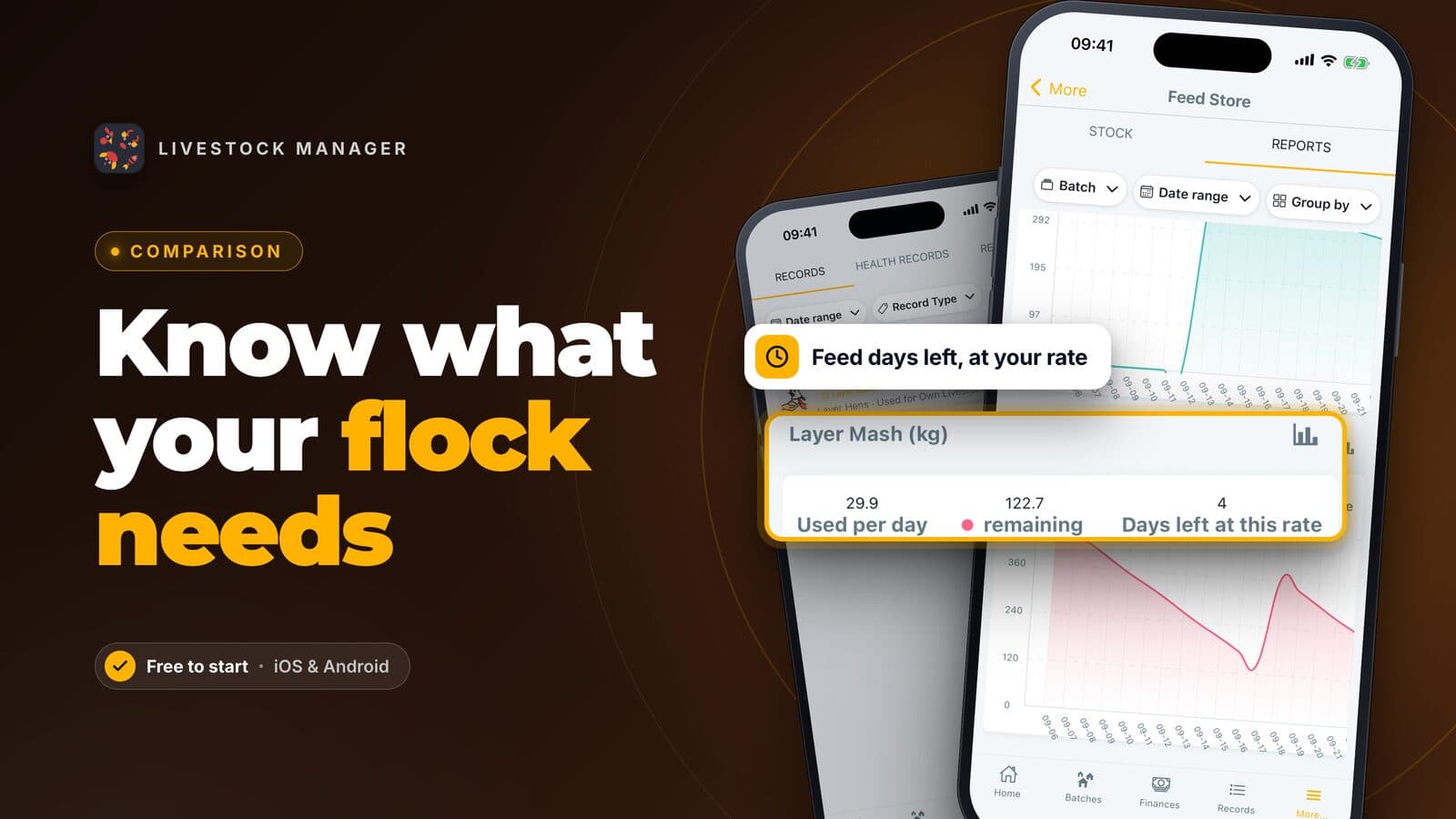
- Feed store with days left, so you order feed when you need it, not before.
- Speak or type entry, and receipt scanning for costs.
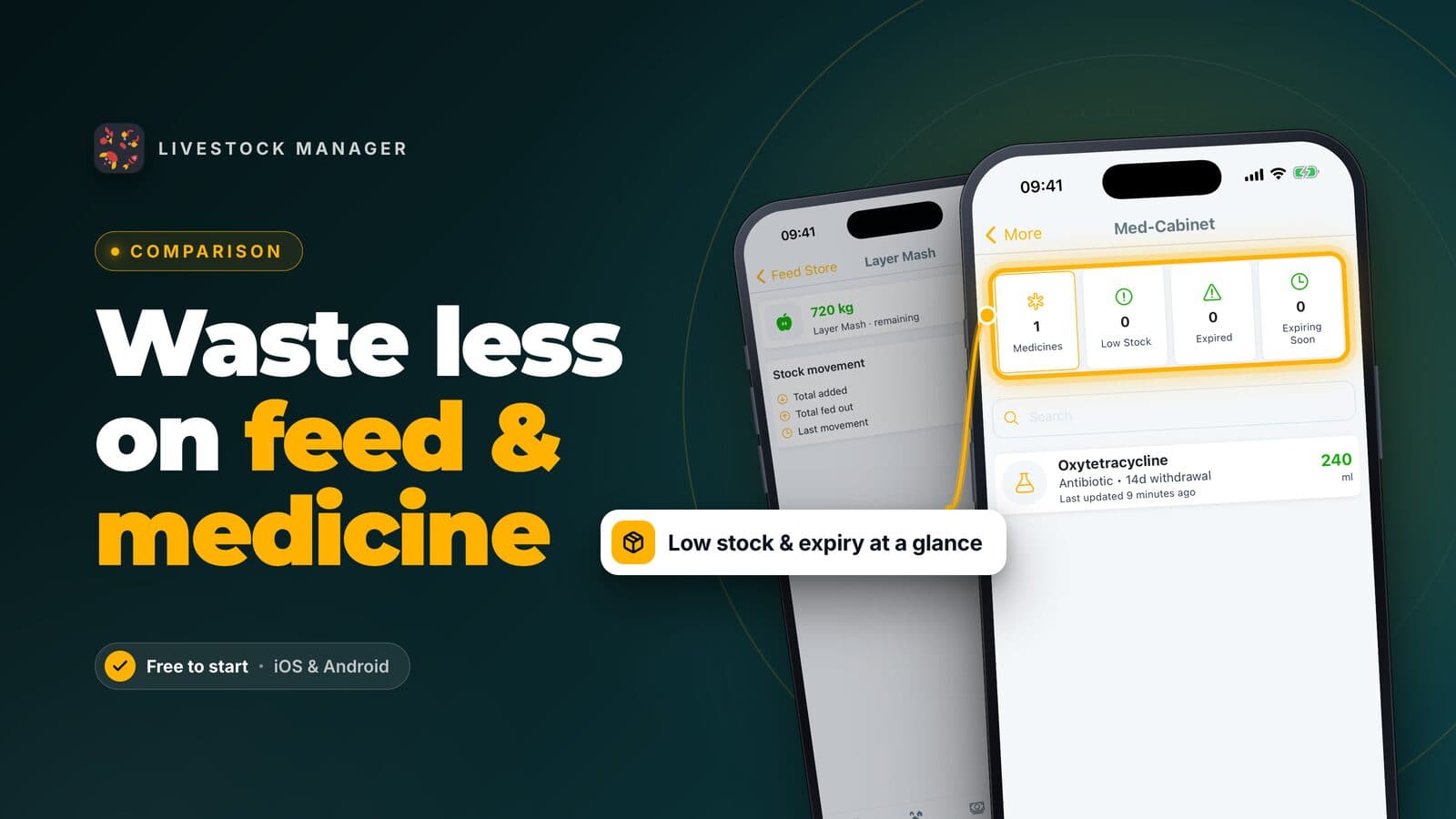
- Health records and a medicine store with withdrawal periods.
- Income and expenses, plus tasks and reminders.
Limits: it needs an internet connection, it has no paddock map, and crops are light crop batches, not a crop planner.
Farmbrite: a wider tool for mixed farms
Farmbrite lists three livestock plans: Essentials at $29 a month, Performance at $49 and Premium at $79, with a 14-day free trial and no credit card needed. It suits farms that also grow crops. If you keep only animals, you may pay for tools you do not use. See our Farmbrite alternatives page.
CattleMax: cattle herds, priced by animal count
CattleMax lists a Commercial plan at $30 a month billed yearly for up to 250 active animals, and a Registered plan at $41 a month billed yearly, with a 21-day free trial and no credit card. It is aimed at cattle, so it will not suit poultry or goats. See CattleMax alternatives.
AgriWebb: cattle and sheep, price on request
AgriWebb prices by the number of cattle and sheep you manage. Its pricing page shows no dollar figure and uses a calculator instead, with a free trial (length not stated). You cannot compare its cost without entering your numbers. See AgriWebb alternatives.
Bushel Farm: grain crops, not livestock
Bushel Farm is aimed at grain crop farmers and focuses on grain contracts and field profitability. It offers 30 days free, and its plans cost $75 (Rainfall, which covers recent rainfall, field mapping, soil maps, futures prices and a digital wallet), $199 (Lite) and $599 (Essentials) a year. It is not built for livestock records.
| Tool | Cost as stated | Free option | Aimed at |
|---|---|---|---|
| Livestock Manager | See the pricing page | Free Starter plan | Small and medium livestock farms |
| Farmbrite | From $29/month (livestock) | 14-day trial | Mixed farms with crops |
| CattleMax | $30/month billed yearly, up to 250 animals | 21-day trial, no card | Cattle |
| AgriWebb | Priced by cattle and sheep count | Free trial (length not stated on its site) | Cattle and sheep |
| Bushel Farm | $75 to $599 a year | 30 days free | Grain crops |
See our wider farm management software comparison.
An illustrative example: feed you stop over-ordering
This example is illustrative. The numbers are round and are not a claim about what any farm will save.
Say you keep 100 hens and, without a clear count, you order feed early and end up with 10 extra bags stuck in storage each year. If a bag costs 20 in your currency, that is 200 tied up, some of it spoiled. If you could see days left and reorder at the right time, you would tie up much less. Use your own bag price and numbers to judge whether a paid plan would pay for itself.
How to get started cheaply
- Set up a free account and one farm. Follow how to set up your farm account.
- Create one batch. Start with one flock or herd, not everything. See how to create a livestock batch.
- Track feed first. Add your feed to the feed store and log each use. See how to track farm feed inventory.
- Log money as it happens. Record each sale and cost in farm income and expense tracking.
- Try voice. Say a record out loud instead of typing it, as in record farm data by voice or text. Upgrade only when you hit a limit.
Unsure the numbers work? Read is livestock farming profitable.
Frequently asked questions
What should I pay for first on a small farm, and what can I skip?
Pay for nothing at first. Start on the free Starter plan, which covers 2 batches and 5 animal profiles per farm, 50 records and 30 transactions a month, and 5 medicines. Buy a paid step only when a limit blocks you, or when you need invoicing or team invites.
How much do farm management apps cost?
It varies widely. On their own sites, Farmbrite lists livestock plans from $29 a month and CattleMax lists $30 a month billed yearly for up to 250 animals. AgriWebb prices by the number of cattle and sheep and shows no dollar figure on its pricing page. Livestock Manager starts free, and paid prices are on its pricing page.
What do paper records really cost me in mistakes?
Mostly forgotten entries, wrong feed counts and missed due dates for vaccinations. None of it shows until it costs you, such as a late feed order or a treatment date you cannot prove. An app does the counting and the reminders for you.
What does my first month cost if I start today?
On Livestock Manager's free plan, nothing. Log one batch, your feed and your money for a month, then check whether the limits fit. Farmbrite and CattleMax offer free trials of 14 and 21 days instead.
What is the cheapest way to start with a farm app?
Start on the free plan with one batch of animals and log only feed and money. Add health records and tasks once the habit sticks, and upgrade only when you hit a limit.