Best Farming App for Small Farms (2026)
On this page
For a small livestock farm that is growing, Livestock Manager is our top pick. You start on a free plan on your phone, and the paid plans add invoices, customers, reports and team invites at the point you need them. The honest caveat: it needs an internet connection and has no paddock map, so a cattle-only ranch that wants pasture maps should look at CattleMax, which lists them on its pricing page.
Disclosure: Livestock Manager is our app. We checked the other tools' prices and features on their own websites on 2026-09-30, and prices can change.
What small farms need from a farming app
- Records that grow with you. Daily eggs or milk, feed, health, and each sale, without a rewrite when you add a second species.
- A clear price for the next step. You should know which limit pushes you to a paid plan before you hit it.
- Selling tools. Customers, invoices and a record of who paid.
- Reports you can hand over. A lender, a landlord or a buyer will ask what you earn and spend. See our farm record-keeping guide for what to keep.
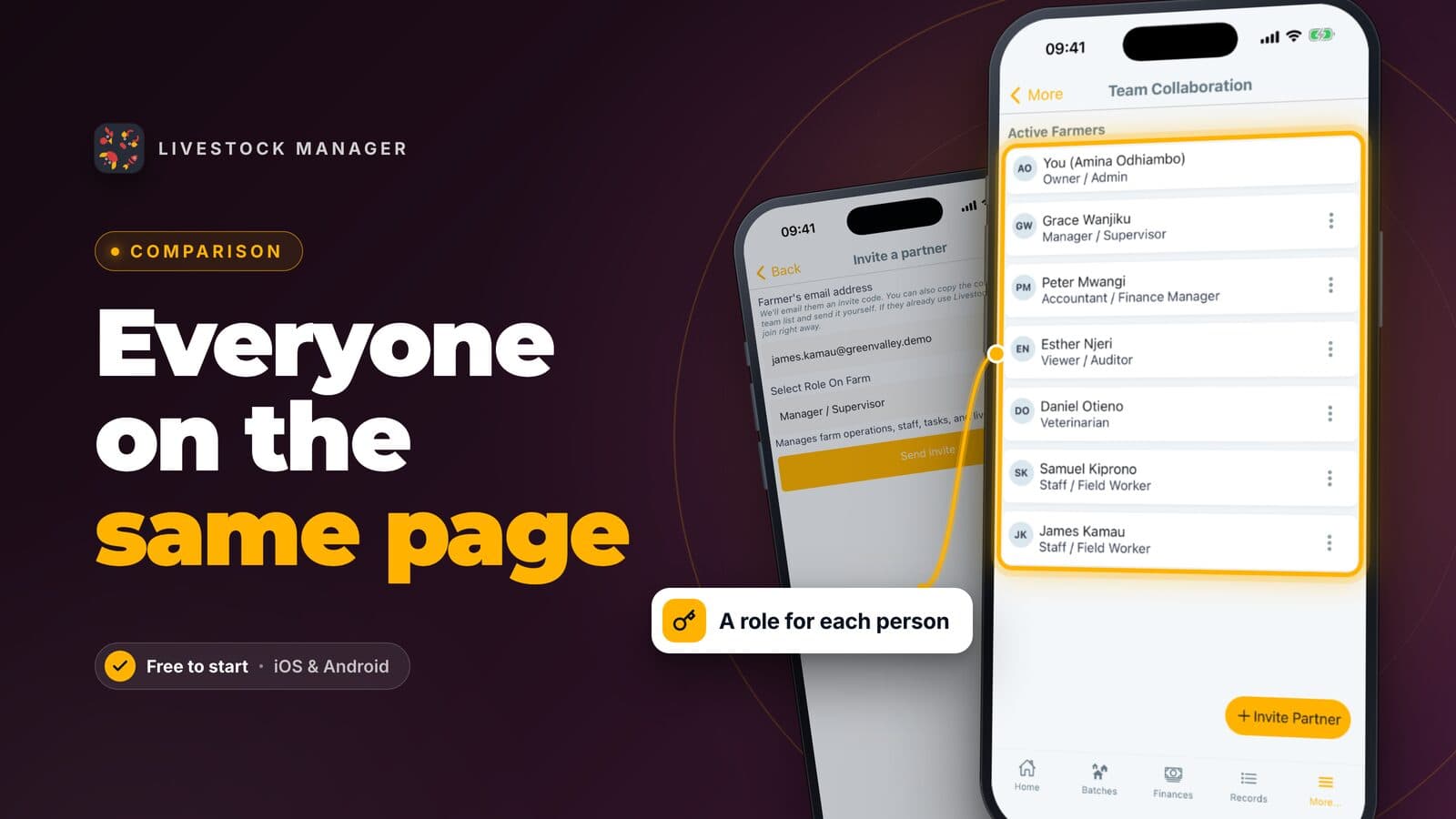
- Team access. Someone else must be able to log feed and eggs without seeing everything.
- Fast entry. If logging takes longer than the chore, the crew stops doing it.
Our picks
Livestock Manager: a free start, paid steps when you sell
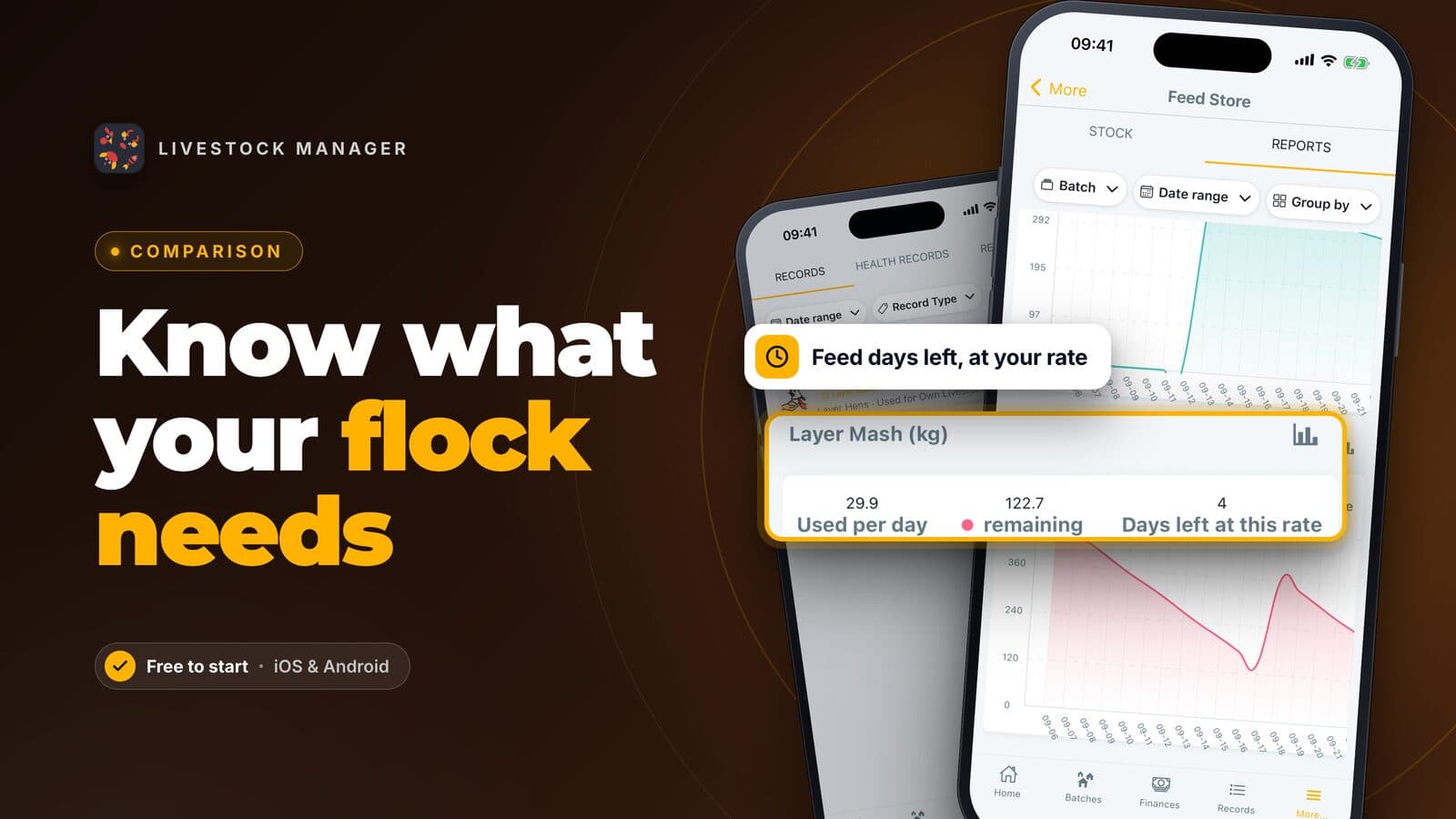
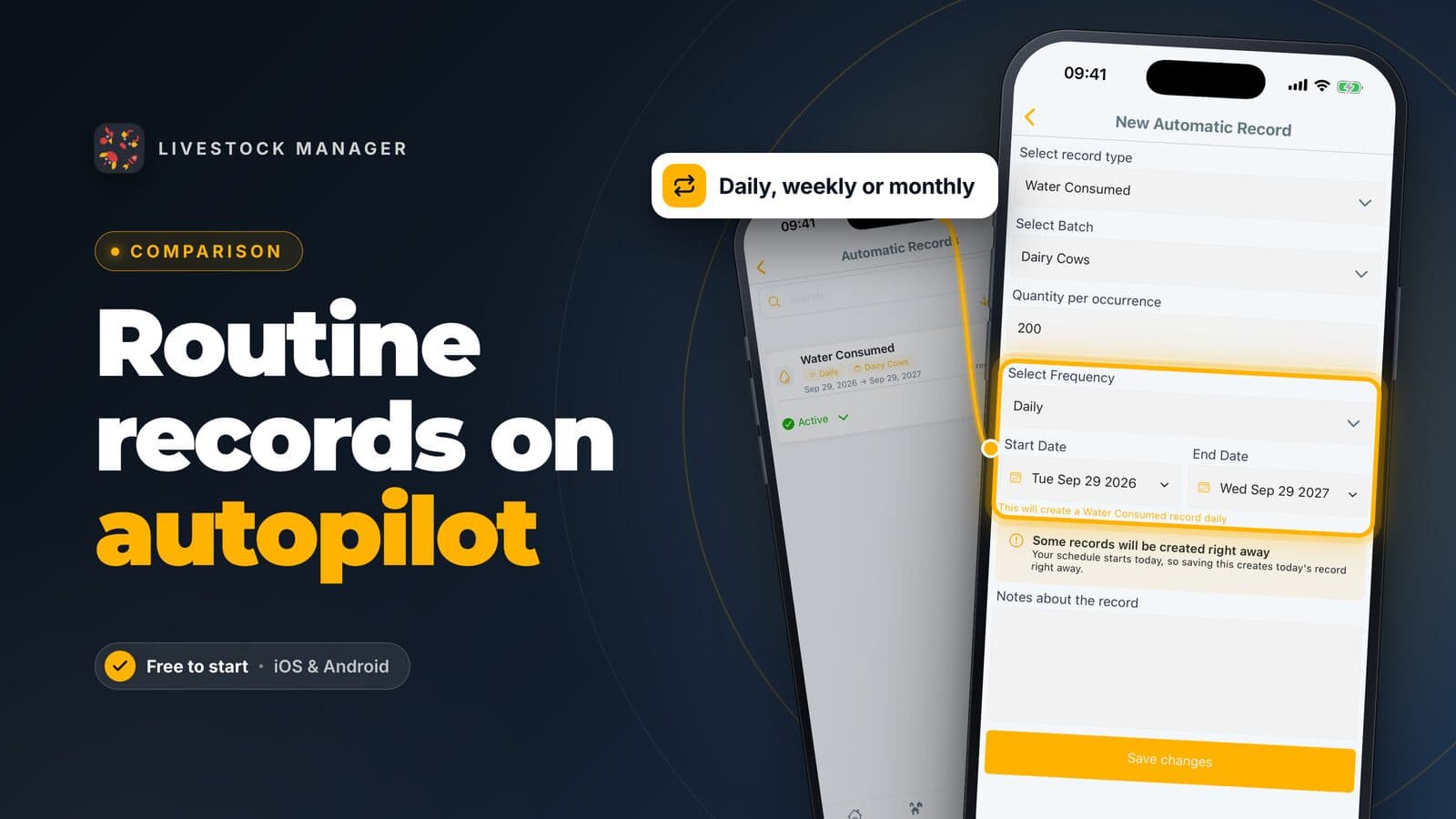
Livestock Manager runs on iOS, Android and the web in 15 languages. You can log records by typing or speaking, scan receipts, keep health records and medicine stock with withdrawal periods, track feed with days left, set tasks and reminders, and follow income and expenses. Breeding due dates are included. Team invites with roles, invoices and automatic daily records are paid features.
The plans are Starter (free), Growth, Scale and Enterprise. These are the limits in our plan configuration:
- Starter: 2 batches per farm, 5 animal profiles per farm, 50 records a month, 30 transactions a month, 5 medicines, 5 contacts and one person on the farm. Reports need Growth or higher. It also has no invoicing or automatic records, and its web app is read-only.
- Growth: 10 batches, unlimited animal profiles, records and transactions, 25 medicines, 30 contacts, 3 people including the owner, 10 report downloads a month (Starter cannot generate them), invoicing, automatic records and full web access.
- Scale: 50 batches, unlimited medicines and contacts, 10 people.
- Enterprise: no limits on these counts.
For monthly prices, see the pricing page, because the price shown depends on your country and store.
Limits: it needs an internet connection. It has no paddock map. Crops are light crop batches, not a crop planner. It suits animals first.
Farmbrite: livestock and crops together
Farmbrite sells livestock plans at $29 a month (Essentials, 300 animals, 5 users), $49 (Performance, 500 animals, unlimited users) and $79 (Premium, 5,000+ animals, with orders, invoicing and pick-lists). Every plan has a 14-day free trial and offline access. It fits a farm that also grows crops. You outgrow Essentials at 300 animals, or when you need invoicing, which its page lists on the $79 plan. See Farmbrite alternatives.
CattleMax: cattle herds, sized by animal count
CattleMax is $30 a month billed yearly for up to 250 active animals, with unlimited users and a 21-day free trial. Prices step up by herd size (50, 100, 250, 500 and on to 2,000+ animals), and sold or archived animals do not count. It is built for cow-calf operations and lists pasture maps on its pricing page, so a mixed farm with goats and poultry is outside its focus. See CattleMax alternatives.
AgriWebb: per-animal pricing for cattle and sheep
AgriWebb charges by the number of cattle and sheep you manage, and offers a free trial. It has three tiers, and financial reporting sits in the top one, Performance. It works offline in paddocks and includes farm maps. Per-animal pricing rises as your flock or herd grows, and it covers cattle and sheep only. See AgriWebb alternatives.
A spreadsheet or notebook: free, until it is not
A notebook or Google Sheets costs nothing and suits a first season. It has no reminders or invoices, and a second person editing the same sheet is where errors start.
Comparison
| Tool | Best fit | Entry price | Size step | Invoicing | Team | Internet needed |
|---|---|---|---|---|---|---|
| Livestock Manager | Mixed livestock, poultry | Free plan | 2 batches free, 10 on Growth | Growth and up | 1, 3, 10 by plan | Yes |
| Farmbrite | Livestock plus crops | $29/month | 300 animals on Essentials | $79 plan | 5 on Essentials | No (offline access) |
| CattleMax | Cattle herds | $30/month billed yearly | 250 active animals | Not stated on its site | Unlimited | Not stated on its site |
| AgriWebb | Cattle and sheep | By animal count | Grows with animals | Not stated on its site | Not stated on its site | No (offline in paddocks) |
| Spreadsheet | First season | Free | Your patience | By hand | Shared file | Depends |
How the free plan pushes you to Growth
Most small farms meet the limits in this order:
- The third batch. A layer flock and a broiler batch fit; the next species does not.
- The 31st transaction. A tray of eggs sold most days can reach 30 in a month.
- The 51st record. Daily eggs, feed and treatments on two batches use it up quickly.
- A second person. Starter is one person. Growth is 3 including you.
- Your first invoice. A restaurant or shop that wants paperwork needs Growth. See how to sell livestock and send invoices.
Reports for a lender or buyer come from the same records, so keep income and expenses steady. You reach Scale at the 11th batch or the 4th person. Our comparison of farm management software covers larger tools.
How to get started
- Set up your farm account and choose your animals.
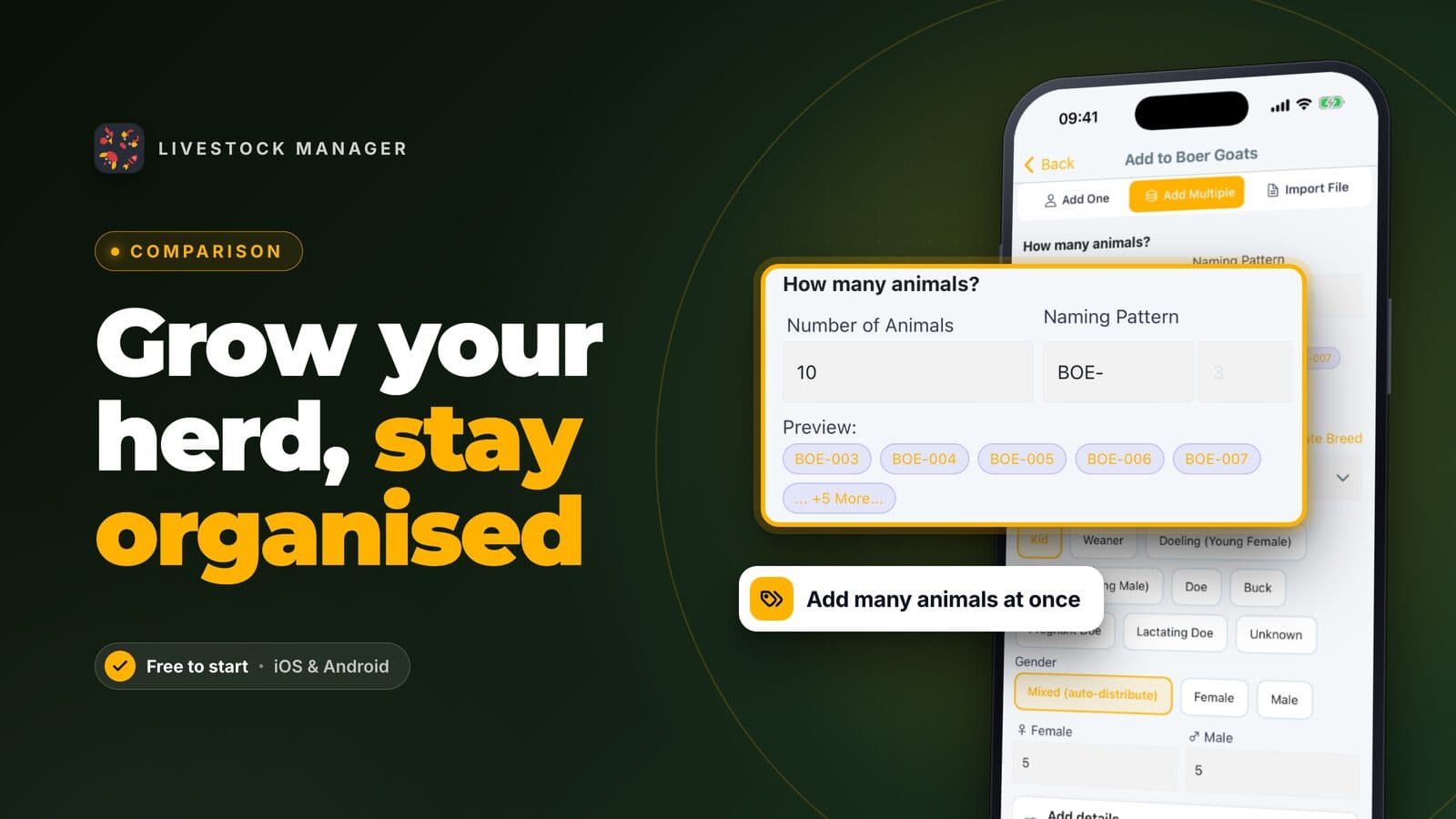
- Create a batch for each group you sell separately.
- Record eggs, milk and daily production, or speak or type your records.
- Add your customers and send an invoice after your first sale.
- Invite a team member with a role so chores are logged by the person who does them.
Frequently asked questions
What is the best farming app for a small farm that is growing?
For a small livestock farm, Livestock Manager is our top pick because the free Starter plan lets you begin with two batches, and Growth adds invoices, team invites and unlimited records when you start selling. If you keep only cattle, CattleMax is worth a look, and if you also grow crops, Farmbrite is.
Which records and limits push a small farm to Growth?
A small farm usually feels it at the third batch, the 51st record in a month, the 31st transaction in a month, or the first customer invoice. Growth lifts the record and transaction caps and allows 10 batches, invoicing and 3 people.
How many people can work on one Livestock Manager farm?
Starter allows one person, the owner. Growth allows 3 people including the owner, Scale allows 10, and Enterprise has no limit.
How much do Farmbrite and CattleMax cost for a small farm?
On 2026-09-30, Farmbrite listed livestock plans at $29, $49 and $79 a month, and CattleMax listed $30 a month billed yearly for up to 250 active animals. AgriWebb prices by the number of cattle and sheep you manage. Prices can change, so check each site.